Spatial polarization of endothelial ICAM-1 governs T-cell exclusion in melanoma

Spatial polarization of endothelial ICAM-1 governs T-cell exclusion in melanoma
Park, H.-R.; Kim, S. J.; Kozlov, N.; Tagore, S.; Wu, L.; Izar, B.; Kim, M.
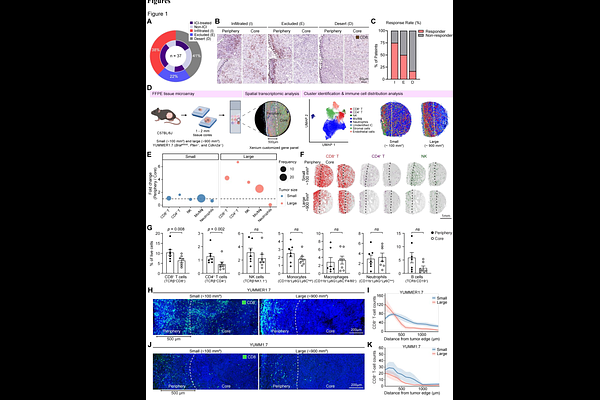
AbstractAn immunosuppressive tumor microenvironment limits therapeutic efficacy and worsens prognosis in melanoma. Beyond T-cell abundance and function, effective tumor control also depends on whether T cells can access malignant cells within the tumor. Although emerging evidence supports that tumor vasculature facilitates immune evasion, the vascular mechanisms that govern intratumoral T-cell positioning remain poorly defined. Using RNA sequencing of endothelial cells isolated from tumor cores versus peripheries in a mouse melanoma model, we identified intercellular adhesion molecule 1 (ICAM-1) as a candidate regulator of T-cell localization. During tumor growth, T cells shifted from a balanced core-margin distribution to marked exclusion from the core, most prominently in T cell-inflamed tumors. This spatial redistribution -less evident in other immune subsets-coincided with high expression of lymphocyte function-associated antigen-1 (LFA-1) on T cells. In parallel, endothelial ICAM-1 became enriched at the tumor periphery, where vascular integrity was compromised, as evidenced by increased vascular leakage and reduced pericyte coverage. Functionally, ICAM-1 blockade restored intratumoral T-cell infiltration, enhanced effector activity, and significantly delayed the growth of immunogenic tumors. Moreover, ICAM-1 inhibition sensitized an immune-refractory tumor to anti-PD-1 checkpoint blockade. Together, these findings identify endothelial ICAM-1 as a vascular determinant of intratumoral T-cell positioning and highlight the ICAM-1/LFA-1 axis as a modifiable checkpoint to reverse T-cell retention at the tumor periphery, thereby enhancing antitumor immunity and immunotherapy efficacy.