Antagonistic regulation of HBZ splicing by hnRNPA1 and hnRNPH1 drives HTLV-1 leukemogenesis.

Antagonistic regulation of HBZ splicing by hnRNPA1 and hnRNPH1 drives HTLV-1 leukemogenesis.
Tram, J.; Mourouvin, C.; Marty, L.; Marie-Delkasse, A.; Lecante, A.; Cesaire, R.; Helias, P.; gaete, S.; Baccini, V.; Barbeau, B.; Donhauser, N.; Thoma-Kress, A.; Mesnard, J.-M.; PELOPONESE, J.-M.
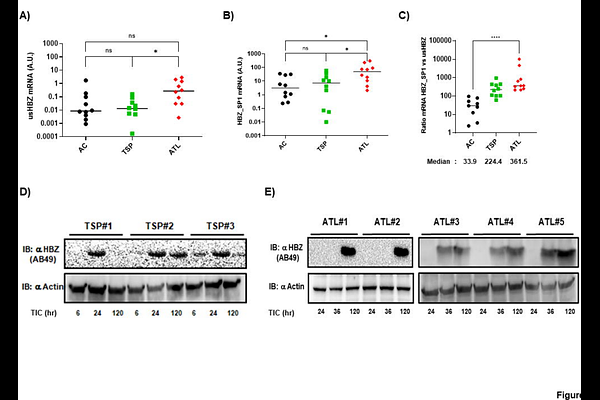
AbstractAdult T-cell leukemia/lymphoma (ATL) is a highly aggressive leukemia driven by Human T-cell Leukemia Virus type 1 (HTLV-1) and remains largely refractory to current therapies. Although hbz is the only viral transcript consistently expressed in acute ATL, the extent to which its alternative splicing shapes disease biology remains unknown. Here, we demonstrate that the splicing of hbz plays a key role in driving cancer development in ATL. Quantitative analyses in HTLV-1-infected cell lines and primary samples revealed a striking enrichment of the spliced isoform HBZ_SP1 (over 200-fold) in CD4 T cells from ATL patients, whereas the unspliced transcript (usHBZ) predominates in CD8 T cells. Despite robust transcription, the usHBZ protein was undetectable, whereas HBZ_SP1 accumulated rapidly, identifying it as the main isoform in CD4 T cells from ATL patients. Furthermore, only HBZ_SP1 drove cellular transformation and conferred marked resistance to chemotherapeutic stress. Mechanistically, we identify a splicing regulatory axis centered on hnRNPA1 and hnRNPH1. Both proteins bind hbz pre-mRNA, but exert opposing effects: hnRNPA1 represses splicing, whereas hnRNPH1 promotes production of the oncogenic HBZ_SP1 isoform. Perturbation of this balance reprograms HBZ isoform expression and alters leukemic cell fitness. Collectively, our findings establish that HBZ inhibits hnRNPA1 transcription, therefore allowing HTLV-1 to hijack host RNA splicing and to generate an oncogenic isoform that drives transformation and chemoresistance. These results uncover a previously unrecognized post-transcriptional mechanism of viral leukemogenesis and position HBZ splicing and its regulators as therapeutic targets in ATL.