Epstein-Barr virus transformation creates a methionine-dependent ferroptosis vulnerability in B cells

Epstein-Barr virus transformation creates a methionine-dependent ferroptosis vulnerability in B cells
White, S.; Guo, R.; Mitra, B.; Li, H.; Li, S.; Liao, Y.; Puri, R.; Asara, J. M.; Stone, E.; Georgiou, G.; Gewurz, B. E.
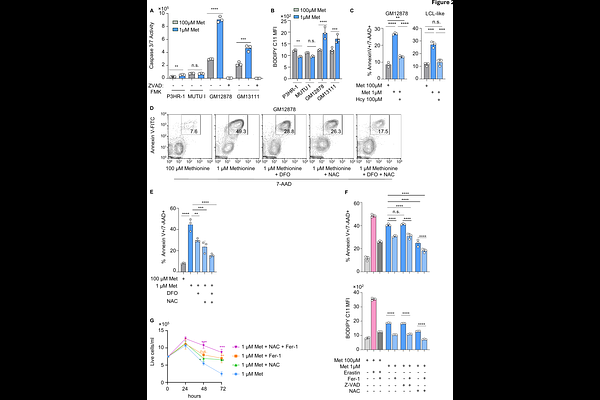
AbstractEpstein-Barr virus (EBV) causes over 200,000 cancers annually, including immunoblastic lymphomas in immunosuppressed hosts. Most transformed cells arrest, yet survive when deprived of the essential amino acid methionine. We instead find that EBV transformed lymphoblastoid cell lines (LCLs), which model the EBV latency III program-driven B-cell lymphoproliferative diseases of immunosuppressed hosts, rapidly die upon methionine restriction. Methionine restriction elevated LCL lipid reactive oxygen species and triggered ferroptosis. Whereas methionine restriction hypomethylates the EBV genome and triggers viral reactivation in latency I Burkitt cells by lowering the cellular methylation potential, the LCL latency III program instead redirected methionine toward redox defense, without altering the SAM/SAH ratio. Stable-isotope tracing revealed that latency III strongly induces transsulfuration, synthesizing cysteine de novo to support glutathione pools. The EBV oncoprotein LMP2A, which mimics B-cell receptor signaling, supported newly infected human B cell cystathionine-{beta}-synthase and cystathionine-{gamma}-lyase expression and methionine dependence, phenocopied by immunoglobulin crosslinking. In vivo, dietary methionine restriction impaired LCL xenograft outgrowth and depleted tumor cystine. Combined methioninase and cyst(e)inase administration blocked both cysteine sources, collapsed tumor glutathione levels, and triggered ferroptosis. Our results define methionine metabolism as a targetable ferroptosis vulnerability of EBV-transformed B cells.