Dissecting FOXA1 pioneering function by acute pharmacological degradation

Dissecting FOXA1 pioneering function by acute pharmacological degradation
Hargis, L. M.; Barta, P. A.; Zhang, Y.; Hayward, R. E.; Cravatt, B. F.; Erb, M. A.
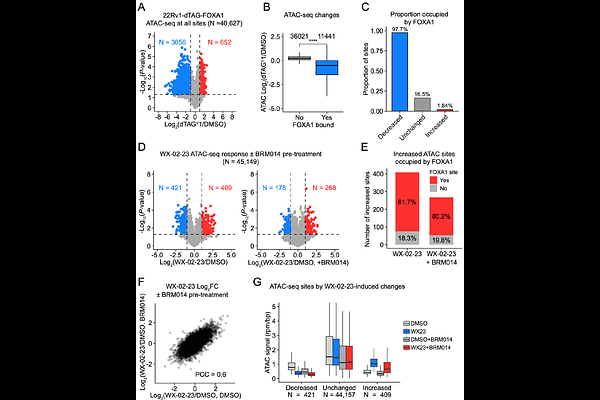
AbstractPioneer factors control transcription by opening chromatin, but a lack of chemical tools has made it difficult to study pioneer activity with kinetic precision. We recently reported covalent chemical probes that remodel the genomic localization of FOXA1, a prototypical pioneer factor essential for the growth of many breast and prostate cancers. Here, we expand the chemical toolbox for FOXA1 by developing a dTAG-based system for small molecule-induced FOXA1 degradation. Coupling pharmacological perturbations to rapid measurements of chromatin structure and function, we find that FOXA1 exclusively initiates chromatin opening at its genomic binding sites. Interestingly, this unidirectional outcome on accessibility both activates and represses gene transcription depending on the chromatin environment surrounding the FOXA1-binding sites. These effects apply to both androgen receptor (AR) target genes and other cancer-relevant genes. Our findings thus uncover regulatory features that translate FOXA1 pioneering activity into both activation and repression of transcriptional programs critical for cancer growth.