Population Genetics of Native Red Mulberry at Its Northwestern Boundary Suggests Postglacial Founder Effects

Population Genetics of Native Red Mulberry at Its Northwestern Boundary Suggests Postglacial Founder Effects
Schreier, S. J.; Nepal, M. P.
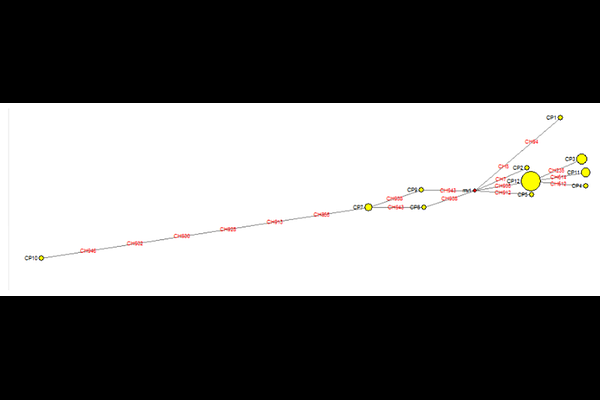
AbstractMorus rubra is native to the eastern United States, with its range extending into the Upper Midwest and southern Ontario, Canada. Its present distribution suggests that past glacial events in North America may have influenced the genetic structure of populations at its northwestern boundary. This study assessed genetic variation among six M. rubra populations believed to have experienced postglacial colonization using published nuclear microsatellite markers and sequences from the chloroplast trnL-trnF region. Five nuclear microsatellite markers previously developed for M. alba were successfully transferred to M. rubra, while the chloroplast trnL-trnF region provided an additional marker for evaluating chlorotype diversity. Nuclear microsatellite diversity was higher in southern unglaciated populations than in northern glaciated populations, a pattern consistent with the observed distribution of chlorotype diversity. Together, these results support ancient founder effects associated with leading-edge expansion following glacial recession and suggest that postglacial colonization contributed to the present-day genetic structure of M. rubra at its northwestern range boundary. Because M. rubra hybridizes with the naturalized invasive M. alba, reduced genetic diversity in marginal populations may increase their vulnerability to genetic swamping. The markers characterized in this study provide useful tools for population genetic research in Morus, and the findings have important implications for the conservation and management of marginal and threatened M. rubra populations in the Upper Midwest.