Muscle March5 restrains an ATF4-GDF15 endocrine stress axis that modulates feeding and body composition

Muscle March5 restrains an ATF4-GDF15 endocrine stress axis that modulates feeding and body composition
Ma, G.; Chen, Y.; Cheng, S.; Chen, Y.; Pang, W.; Chen, L.; Cao, H.
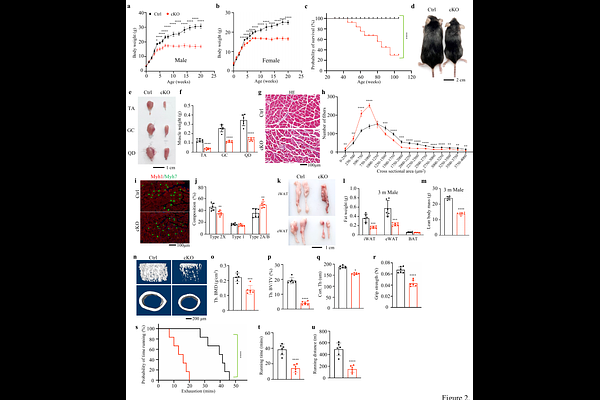
AbstractSkeletal muscle can release endocrine stress signals during aging and wasting, but the upstream mechanisms that restrain this response remain incompletely defined. Here we identify March5 as a muscle proteostatic checkpoint that limits ATF4-dependent GDF15 production. March5 expression declined in aged and atrophic muscle, whereas muscle-specific March5 deletion induced ATF4 accumulation, marked GDF15 elevation, reduced food intake and progressive loss of body, muscle and bone mass. Restoration of feeding, GDF15 neutralization or muscle Atf4 deletion substantially attenuated the wasting phenotype. Mechanistically, March5 interacted with ATF4 and promoted its ubiquitination at K92, thereby limiting ATF4 stability and Gdf15 expression. Conversely, muscle March5 gain-of-function or pharmacological attenuation of ATF4 signaling improved feeding, body composition and physical performance in aged mice. These findings define a March5-ATF4-GDF15 endocrine stress axis linking muscle proteostatic control to feeding suppression and systemic body-composition remodeling.