Denuded peptidoglycan oligosaccharides enable the biochemical investigation of bacterial cell wall recognition, modification, and degradation

Denuded peptidoglycan oligosaccharides enable the biochemical investigation of bacterial cell wall recognition, modification, and degradation
Emmanuel, B. G.; DelMistro, G.; Anderson, A. C.; Vandenende, C.; Clarke, A. J.; Sychantha, D.
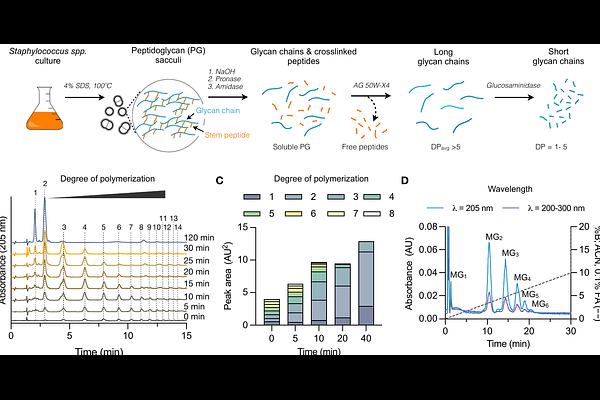
AbstractPeptidoglycan is an essential component of the bacterial cell wall, providing mechanical strength and maintaining cell shape. It consists of glycan chains crosslinked by short peptide stems, resulting in a chemically heterogeneous macromolecule that remains challenging to study in a well-defined form. Access to discrete peptidoglycan fragments has therefore been critical for advancing biochemical and structural studies of cell wall-active enzymes. However, current synthetic, semi-synthetic, and cell wall extraction approaches remain limited by the complexity of carbohydrate chemistry and the difficulty of isolating pure, well-defined material. Here, we report a facile enzymatic approach for generating defined, denuded peptidoglycan oligosaccharides from the cell walls of two Staphylococcus species. These oligosaccharides, which terminate in N-acetylglucosamine and range from two to five disaccharide units in length, serve as substrates for a diverse panel of peptidoglycan-active enzymes that cleave or chemically modify the glycan backbone. We further show that these denuded oligosaccharides can be used in lysozyme-catalyzed transglycosylation reactions to generate p-nitrophenyl derivatives, enabling continuous colorimetric monitoring of peptidoglycan-cleaving enzymes. This method provides a practical route to defined peptidoglycan glycans and establishes a platform for further structural diversification, including stem peptide reattachment, quantitative enzyme assays, and structural characterization of peptidoglycan-binding proteins.