Introduction to Single-cell Physiologically-Based Pharmacokinetic (scPBPK) Models

Introduction to Single-cell Physiologically-Based Pharmacokinetic (scPBPK) Models
Saini, A.; Gallo, J.
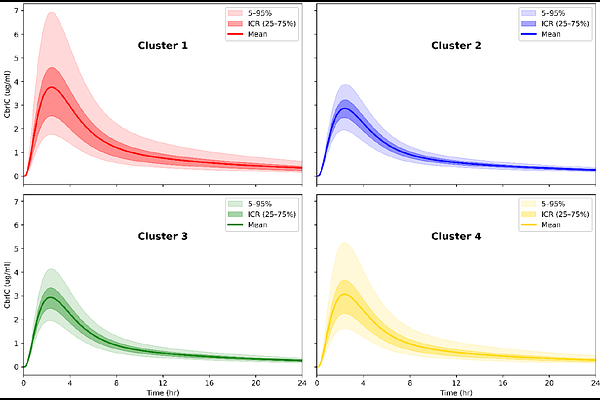
AbstractThe current investigation introduces single-cell physiologically-based pharmacokinetic (scPBPK) models to gain insight into drug disposition at the cellular scale. The transition from standard PBPK (sPBPK) models to scPBPK models required depiction of expression-dependent (ED) processes, such as drug metabolism or membrane transport. ED processes utilize weighting functions - a defined or data-driven distribution - that yield heterogeneity in individual cell kinetics. Two scPBPK model examples are provided, one involving a drug (AZD1775) subject to 3 ED blood-brain barrier transport processes, and another drug (midazolam) with a single ED process of metabolism by hepatocytes. For both examples, the weighting function for each ED process was defined by a negative binomial distribution that is often used in scRNAseq analytics. The AZD1775 model simulations indicated a large degree of single cell drug concentration heterogeneity, whereas those for midazolam did not, due to high membrane transport relative to metabolism. scPBPK models offer a means to probe cellular pharmacokinetics compatible with modern omic technologies and may be extended to pharmacodynamic models.