Murine metabolic HFpEF is associated with mitochondrial substrate inflexibility and S-nitrosylation remodeling

Murine metabolic HFpEF is associated with mitochondrial substrate inflexibility and S-nitrosylation remodeling
Bibli, S. I.
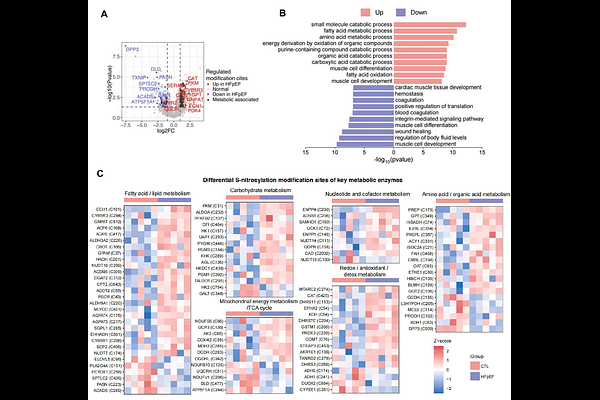
AbstractHeart failure with preserved ejection fraction (HFpEF) is a heterogeneous condition with incompletely defined myocardial mechanisms. Here, using a two-hit murine model of cardiometabolic HFpEF induced by high-fat diet and endothelial nitric oxide synthase inhibition, we define a mitochondrial metabolic phenotype characterized by substrate inflexibility, redox stress, and S-nitrosylation remodeling. While global proteomic changes were modest, metabolomic profiling revealed accumulation of tricarboxylic acid cycle intermediates, increased dicarboxylic acids, and altered redox-associated metabolites, consistent with inefficient oxidative metabolism and mitochondrial redox imbalance in this experimental setting. S-nitrosylation proteomics demonstrated a highly organized and bidirectional remodeling pattern affecting proteins involved in fatty acid/lipid metabolism, carbohydrate metabolism, mitochondrial energy metabolism, amino acid and organic acid metabolism, nucleotide/cofactor metabolism, and redox defense. Beta-hydroxybutyrate (BHB), an alternative mitochondrial substrate, improved basal and ATP-linked respiration, reduced selected TCA-cycle intermediates, lowered mitochondrial reactive oxygen species and the NADH/NAD+ ratio, partially restored the GSH/GSSG ratio, and improved diastolic and functional phenotypes without altering preserved ejection fraction. Together, these findings define a redox-sensitive mitochondrial metabolic state in the HFD/L-NAME model and identify ketone supplementation as a partial metabolic rescue strategy in this context. At the same time, they highlight an important limitation of murine HFpEF models: such models do not faithfully reproduce the metabolic phenotype of human HFpEF and should therefore be interpreted as experimental systems rather than human disease equivalents.