Cholesterol Biosynthesis is a Targetable Vulnerability of CEBPA-mutant Acute Myeloid Leukemia

Cholesterol Biosynthesis is a Targetable Vulnerability of CEBPA-mutant Acute Myeloid Leukemia
Ulfbeck Schovsbo, S.; Liu, Y.; Aragon-Fernandez, P.; Gordon, S.; Bruhn Schuster, M.; Su, J.; Pundhir, S.; Mikkelsen, N. S.; Schoof, E. M.; Theilgaard-Monch, K.; Gronbaek, K.; Bak, R. O.; de Boer, B.; Porse, B. T.
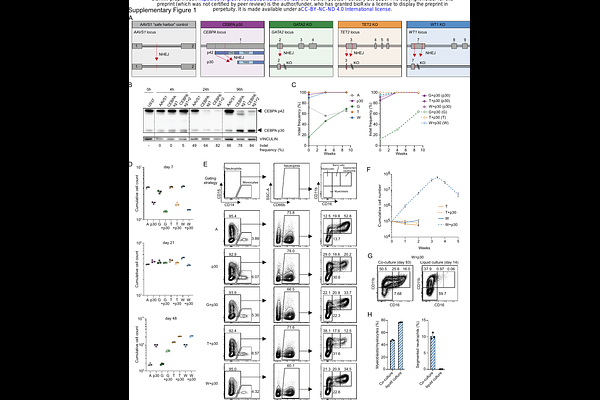
AbstractBi-allelic CEBPA mutations occur in 5-15% of acute myeloid leukemia (AML) patients. The precise molecular consequences of CEBPA mutations, especially in combination with frequently co-occurring mutations in TET2, WT1, and GATA2, remain incompletely understood. Here, we present a robust human model of CEBPA-mutant AML through gene editing of healthy bone marrow-derived hematopoietic stem cells. Loss of the CEBPA-p42 isoform expressed in healthy cells with concomitant upregulation of the leukemic CEBPA-p30 isoform resulted in a myeloproliferative phenotype. Concurrent loss-of-function mutations in TET2 or WT1 drove full leukemic transformation, while GATA2 haploinsufficiency promoted erythroid precursor accumulation without overt AML. Single-cell transcriptomics and low-input proteomics revealed enhanced myeloid output, increased interferon signaling and elevated cholesterol biosynthesis in leukemic cells. Targeting cholesterol synthesis enhanced chemosensitivity, highlighting a potential therapeutic vulnerability, particularly relevant for CEBPA-mutant patients harboring co-mutations in TET2 or WT1, which have poor outcomes.