KRAS inhibition is an effective therapy for appendiceal adenocarcinoma

KRAS inhibition is an effective therapy for appendiceal adenocarcinoma
Chowdhury, S.; Ito, I.; Pattalachinti, V. K.; Yousef, A. M.; Yousef, M. M.; Khoury, S. E.; Hornstein, N.; Seldomridge, A. N.; Hong, D.; Overman, M. J.; Taggart, M. W.; Foo, W. C.; Helmink, B.; Fournier, K. F.; Shen, J. P.
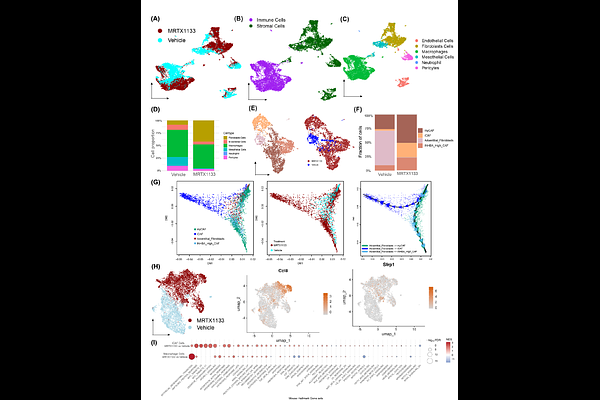
AbstractBackground: Appendiceal adenocarcinoma (AA) is a rare cancer with limited treatment options. KRAS is the most commonly mutated gene in AA and a promising therapeutic target, but its preclinical and translational relevance in AA remains unclear. Methods: We evaluated KRAS-G12D-specific (MRTX1133) and pan-KRAS inhibitor (RMC-6236) in KRAS-mut organoid and orthotopic PDX models of AA. Tumor-intrinsic and microenvironmental responses were characterized using multi-omics profiling. Clinical outcomes were also assessed in six heavily pre-treated AA patients treated with KRAS inhibitors. Results: MRTX1133 was highly effective for KRAS-G12D organoids (IC50=4.1 nM); both KRAS-G12D and KRAS-G12V organoids were sensitive to RMC-6236 (IC50=4.4 nM vs 0.5 nM, respectively). In orthotopic PDX models of peritoneal carcinomatosis from AA, MRTX1133 significantly reduced tumor growth in the KRAS-G12D model TM00351, and RMC-6236 reduced tumor growth in KRAS-G12V model AAPDX-16. Pathologic evaluation showed dramatically reduced tumor cellularity, proliferation, and pERK expression as well as induction of apoptosis. Gene Sets Enrichment Analysis (GSEA) revealed significant downregulations of E2F targets (NES=-1.9, p-adj=0.06) and the newly developed RAS/ERK (NES=-2.3, p-adj=0.06) gene set, consistent with the observed decrease in cell proliferation. There was marked upregulation of EMT (NES=2.7, FDR<0.001) and TGF-{beta} signaling (NES=2.3, FDR=0.004) in remaining tumor cells, suggesting these pathways could confer resistance. scRNA-seq analysis of TME showed dramatic shifts in cancer-associated fibroblasts (CAFs), with KRAS inhibition driving a shift from normal fibroblasts to inflammatory CAFs, and upregulation of interferon alpha and gamma pathways, suggesting that KRAS inhibition can activate innate immune response in the setting of peritoneal metastases. In a cohort of 6 heavily pre-treated patients with AA treated with KRAS inhibitors (1 G12D, 3 G12C, 2 pan-KRAS), all had biochemical response based on CEA/Ca19-9 or ctDNA and clinical benefit by RECIST criteria (1 CR, 1 PR, 4 SD). Conclusions: While effective suppression of RAS/ERK signaling by KRAS inhibitors reduces tumor growth, adaptive activation of EMT and TGF-{beta} pathways may mediate resistance in KRAS-mut AA. Additionally, KRAS inhibition remodels TME and may enhance innate immune signaling. These findings support continued clinical development of KRAS inhibitors in AA and provide a rationale for combination strategies targeting resistance pathways and stromal remodeling.