Synthesis of Ultra-Large Fibrous Proteins from Bacteria via a Looped-Translation System

Synthesis of Ultra-Large Fibrous Proteins from Bacteria via a Looped-Translation System
Xie, Q.; Papa, L. J.; Barybin, A. M.; Xiong, M.; Shoulders, M. D.; Fried, S. D.
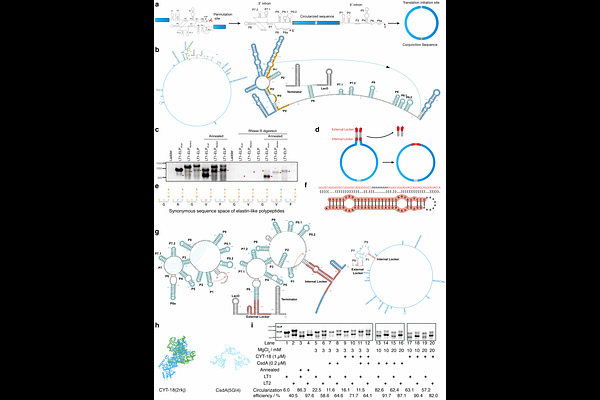
AbstractHigh molecular weight fibrous proteins such as silk, elastin, and collagens, are fundamental for providing shape to macroscopic biological structures, yet their recombinant production remains challenging because of their extreme size and sequence repetitiveness. Here, we report a circular RNA-based ribosome translation platform that enables iterative ribosome synthesis of fibrous proteins through continuously 'looped' translation. To promote efficient circularization of repetitive fibrous protein-transcripts, we combined a synonymous codon locker sequence strategy with RNA circularization chaperones. Guided by a ribosome traffic model, we further optimized the translation bottlenecks within the circular RNA, substantially improving translation yields. The established looped translation platform is applicable to at least six classes of fibrous proteins and generated products with molecular weight exceeding titin at 3.8 MDa. The synthesized polypeptides were characterized through electron microscopy, bulk material fabrication, and mechanical analysis, demonstrating properties associated with ultra-high molecular weight polypeptides. Finally, we coupled looped translation to secretion through a programmed ribosomal frameshift, enabling export of fibrous protein across cellular membranes in both Escherichia coli and Bacillus subtilis. We envision that the genetic tools presented here could find a range of applications in bioplastics and engineered living materials.