Iron Metabolism as a Therapeutic Vulnerability in Stem Cell-Like Castration-Resistant Prostate Cancer

Iron Metabolism as a Therapeutic Vulnerability in Stem Cell-Like Castration-Resistant Prostate Cancer
Cheng, W.; Brunello, A.; Bonollo, F.; Marti, T.; Chouvardas, P.; Labbe, D. P.; De Menna, M.; Thalmann, G.; Karkampouna, S.; Kruithof-de Julio, M.
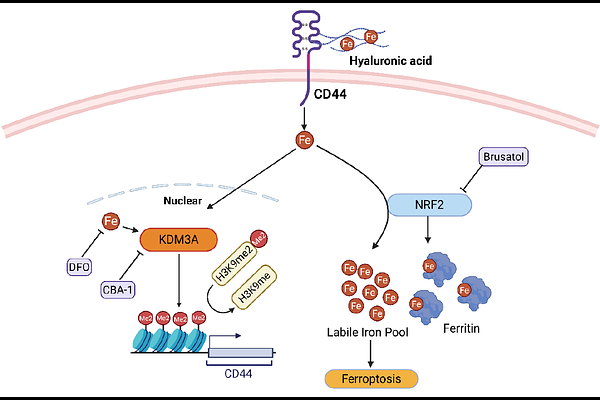
AbstractProstate cancer is the second most common malignancy among men, with androgen deprivation therapy (ADT) serving as the standard treatment due to the hormone sensitivity of prostate tumors. However, therapeutic resistance frequently develops, leading to castration-resistant prostate cancer (CRPC), an aggressive and lethal disease. A recently defined subtype, stem cell-like CRPC (CRPC-SCL), accounts for approximately 25% of CRPC cases and demonstrates poor responsiveness to ADT. CRPC-SCL is characterized by the expression of Cluster of Differentiation 44 (CD44), a glycoprotein that promotes hyaluronic acid binding and uptake. Within CRPC-SCL patient-derived xenograft (PDX) model, CD44 high (CD44hi) cells exhibit enhanced tumorigenicity and proliferative capacity. Importantly, iron metabolism emerges as a critical regulator of this population: CD44hi cells maintain elevated intracellular iron, which sustains CD44 expression and stem cell-like properties by modulating H3K9me2 modification. Leveraging this vulnerability, inhibition of the iron-regulatory factor NRF2 was shown to increase intracellular free iron and selectively induce ferroptosis in CD44hi cells. These findings highlight the therapeutic potential of targeting iron metabolism to induce ferroptosis as a novel treatment strategy for CRPC-SCL.