Overcoming Daraxonrasib Resistance: Allele-Specific Mechanisms Guide Salvage Therapy in Pancreatic Cancer

Overcoming Daraxonrasib Resistance: Allele-Specific Mechanisms Guide Salvage Therapy in Pancreatic Cancer
Dorbin, D.; Herrera, J.; Davidson, R.; Chandrashekar, N. K.; Scheuber, G.; Jayakrishnan, P.; Rajesh, C.; Johnson, G.; Yuan, J.; Sochor, M.; Langenheim, J. F.; Aldakkak, M.; Messerly, C.; Wittmann, J.; Szabo, A.; Sayahpour, F. A.; Atallah, N. L.; Peterson, F. C.; Volkman, B. F.; Ali, M.; Ke, E.; Evans, D. B.; Tsai, S.; Lytle, N. K.; Seo, Y. D.; Kurzrock, R.; Hobbs, G. A.; Kamgar, M.; McFall, T.
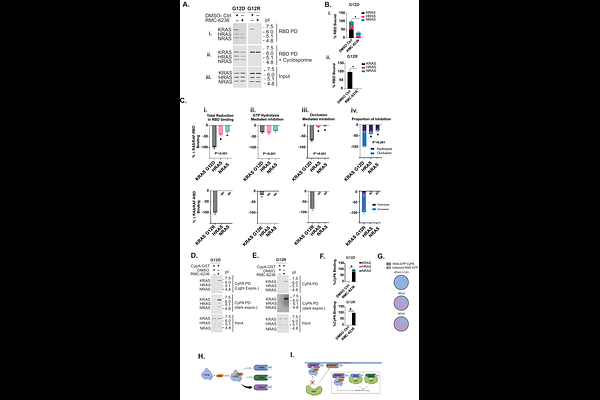
AbstractClinical-grade RAS inhibitors raise an unresolved question: do oncogenic KRAS-alleles impose distinct constraints on adaptive resistance that can be exploited therapeutically? Using daraxonrasib (RMC-6236), a multi-selective RAS(ON) inhibitor, we compared resistance mechanisms between KRASG12D and KRASG12R, alleles with fundamentally different RAS network dynamics. Daraxonrasib inhibited KRASMUT primarily through steric occlusion of effector binding, while engaging RASWT only modestly (~20%) via accelerated GTP hydrolysis. KRASG12R is marked by its inability to transactivate RASWT, and it was observed that daraxonrasib resistant KRASG12R cells utilize EGFR/RASWT-GTP signaling as the dominant adaptive route. In contrast, KRASG12D resistance arose primarily through retained KRASG12D-GTP signaling, associated with decrease of cyclophilin A (CypA), the cellular binding partner required for daraxonrasib activity. The shift from KRASG12R dependence to the EGFR/RASWT axis suppresses MEK phosphorylation, conferring sensitivity to trametinib. We confirmed this divergence clinically: a KRASG12R PDAC patient who progressed after 10 months on daraxonrasib showed tumor EGFR/RASWT activation, and rapid 3D-bioprinted patient-derived toroid modeling predicted trametinib sensitivity. Sixth-line trametinib-based combination therapy achieved ~5 months of disease control despite rapid progression on two prior regimens. This patient ultimately achieved 40 months of overall survival, far exceeding the 8-12 month median for metastatic PDAC. These findings infer allele-specific, CypA- and EGFR-dependent resistance programs to pan-RAS inhibition and demonstrate that rapid patient tumor modeling can translate resistance biology into actionable late-line treatment decisions.