Preclinical efficacy and safety of Tegavivint in Wnt-activated hepatocellular carcinoma

Preclinical efficacy and safety of Tegavivint in Wnt-activated hepatocellular carcinoma
Suzuki, T.; Curran, C.; Drake, T. M.; May, S.; Yin Swe, K. L.; Georgakopoulou, A.; Quince, M.; Chalmers, F.; Paterson, E.; Duncan, A.; Horrigan, S.; Kelly, M. E.; Nixon, C.; Villar, V. H.; Bird, T. G.
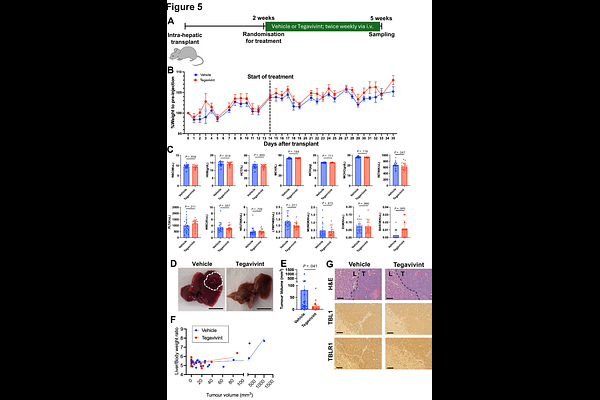
AbstractBackground & Aims: Hepatocellular carcinoma (HCC), a predominant form of liver cancer, remains a significant clinical unmet need. Given that 30 to 50% of HCC cases harbour mutations in the Wnt/{beta}-catenin signalling pathway, targeting this cascade represents a promising therapeutic strategy. However, the clinical translation of Wnt inhibitors has been hindered by severe adverse events observed in preclinical models and early-phase clinical trials, primarily due to the essential role of Wnt signalling in maintaining normal tissues such as the intestine and bone. Methods: We examined the efficacy of Tegavivint, a first-in-class Wnt pathway inhibitor that targets TBL1, against HCC to elucidate its underlying mechanism of action. We evaluated the dose-response of Tegavivint and its effects on the cell cycle, apoptosis, and Wnt target gene expression using HepG2, HUH6, and HUH7 cell lines in vitro. Furthermore, we employed an orthotopic xenograft transplant model using HepG2 cells in immunodeficient mice to assess the safety profile and on-target anti-cancer efficacy of Tegavivint in vivo. Results: Tegavivint exhibited potent Wnt pathway-suppressing effects in cancer cells with constitutive Wnt pathway activation. Notably, Tegavivint displayed robust anti-tumour activity across a broad range of HCC cell lines, regardless of their Wnt pathway activation status. While Tegavivint inhibited the Wnt pathway and triggered the activation of apoptotic pathways in most cell lines, our findings suggest that it also can induce cell death by activating alternative non-apoptotic pathways in apoptosis-resistant cancer cells. In an orthotopic transplant mouse model, Tegavivint significantly downregulated Wnt pathway target genes, inhibited cell proliferation, induced apoptosis and suppressed growth in tumours. Conclusions: Taken together, our data establish a robust foundation for evaluating Tegavivint as a novel therapeutic option, specifically tailored for HCC patients harbouring Wnt-driven hepatic malignancies.