Human-Relevant Lead Exposure During Differentiation Alters the Transcriptomic Profile of Human Induced Pluripotent Stem Cell-Derived Cardiomyocytes

Human-Relevant Lead Exposure During Differentiation Alters the Transcriptomic Profile of Human Induced Pluripotent Stem Cell-Derived Cardiomyocytes
Sala-Hamrick, K. E.; Tapaswi, A.; Monteiro Da Rocha, A.; Colacino, J.; Svoboda, L. K.
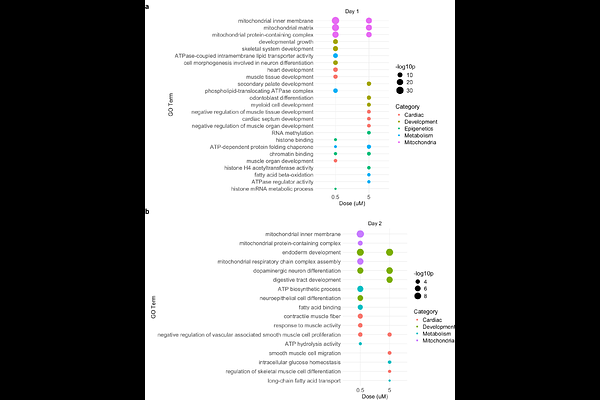
AbstractCardiovascular disease (CVD) etiology is strongly influenced by lead (Pb) exposure, but the underlying molecular and functional mechanisms are unclear, particularly during development. Using human induced pluripotent stem cell (iPSC) derived cardiomyocytes, we examined the effects of human-relevant Pb exposure during ventricular cardiomyocyte differentiation on transcription at several time points. We used an established protocol that temporally modulates Wnt signaling to differentiate iPSCs into contractile cardiomyocytes and exposed cells to 0.5 or 5 micromolar Pb, or control conditions during the first eight days of differentiation. Gene expression profiling on days 1, 2, 6, and 15 revealed significant Pb-induced changes in gene expression and dysregulation of pathways related to heart development and function, epigenetic machinery, and mitochondrial function throughout differentiation. Using BMDExpress3 modelling software, we calculated gene and biological pathway-specific best fit benchmark concentrations (BMCs) and found gene expression changes induced by Pb that were unique by day of differentiation but corresponded to a similar and human-relevant median benchmark concentration of 0.2 micromolar for all days assessed. Overall, our findings provide evidence that transient Pb exposure during cardiomyocyte differentiation causes transcriptional changes in human cardiomyocytes that persist even after cessation of exposure, underscoring the need for further investigation into how Pb exposure may impact heart development and function.