Low cadmium concentrations alter B and T cell responses in Jamaican fruit bats (Artibeus jamaicensis)

Low cadmium concentrations alter B and T cell responses in Jamaican fruit bats (Artibeus jamaicensis)
Pulscher, L. A.; Charley, P. A.; Zhan, S.; Reasoner, C.; Burke, B.; Schountz, T.
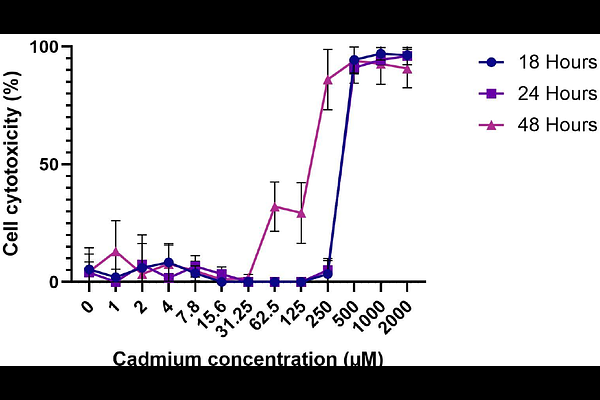
AbstractBats are exposed to a variety of pollutants, including cadmium (Cd), that can impair immune function and potentially increase viral shedding and burden. Despite this, little is known about the impacts of heavy metals on bats. This study aimed to determine the impacts of Cd exposure on bat T and B cell immune responses in naive and coronavirus infected bats and determine the impact of Cd on viral replication in Jamaican fruit bat (JFB; Artibeus jamaicensis) cells. To determine the impact of Cd exposure on adaptive immune responses, splenocyte cultures from naive and BANAL-52 coronavirus infected JFB were treated with 0, 1, and 10 M Cd and stimulated overnight with concanavalin A. RNA was extracted, a SYBR Green qPCR was used to assess gene expression. To determine if Cd exposure increased viral replication, two JFB kidney cell clones were treated with 0, 1, 10, and 50 M of CdCl2 overnight and then infected with Cedar virus (CedV). Supernatants were collected and viral titers determined. Several transcripts were upregulated in both naive and virus infected JFB splenocytes treated with Cd. B cell transcripts were significantly upregulated in a dose-dependent manner and T cell transcripts were also increased in Cd treated splenocytes. Assessment of transcripts associated with T cell subsets suggest a predominant Th2 response in Cd treated splenocytes. Viral replication was not significantly different in Cd treated kidney clones compared to the non-treated cells. These studies provide evidence that JFB adaptive immune responses are altered when exposed to low Cd concentrations.