Whole transcriptome analysis reveals ELK3 as a key driver of metastasis through regulation of 3D migration and stemness in triple-negative breast cancer cells

Whole transcriptome analysis reveals ELK3 as a key driver of metastasis through regulation of 3D migration and stemness in triple-negative breast cancer cells
Cruceriu, D.; Balacescu, L.; Baldasici, O.; Miron, S.; Szigyarto, I. L.; Burlacu, A.; Banciu, M.; Balacescu, O.
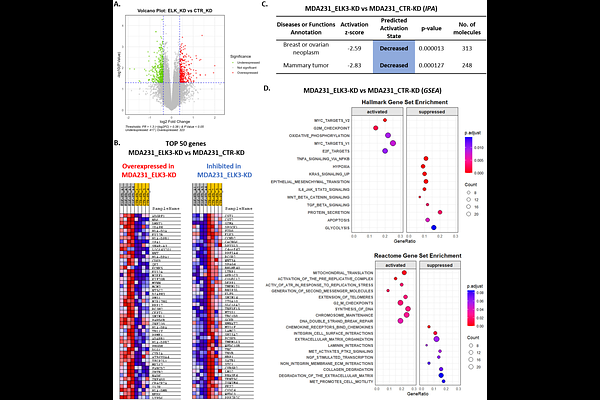
AbstractMetastasis is the leading cause of mortality in breast cancer and remains largely untargeted therapeutically. Identifying molecular drivers of metastatic progression is essential for developing effective treatments. This study investigated the role of the transcription factor ELK3 in triple-negative breast cancer (TNBC) metastasis by defining the cellular and molecular processes it regulates. MDA231 cells with ELK3 overexpression (OE) or knockdown (KD) were generated by lentiviral transduction. Transcriptomic alterations induced by ELK3-KD were analyzed by microarray and validated by RT-qPCR. Ingenuity Pathway Analysis and Gene Set Enrichment Analysis identified ELK3-dependent metastasis-associated pathways, which were functionally validated using 3D microfluidic migration assays, mammosphere formation assays, and flow cytometry/AlamarBlue proliferation assays. High ELK3 expression correlated with a mesenchymal phenotype in BC cell lines and lymph node invasion in patient tumors. ELK3-KD significantly altered 740 genes, many linked to migration and stemness. Functionally, ELK3 enhanced 3D confined migration, likely through regulation of EMT, cell adhesion and protrusion formation. ELK3 also promoted cancer stem cell traits, potentially via hypoxia-related and WNT/{beta}-catenin, JAK/STAT3, TGF-{beta}, Notch1, and NF-{kappa}B signaling pathways. Additionally, ELK3 induced cellular quiescence while suppressing proliferation under adherent conditions. Overall, ELK3 acts as a pro-metastatic regulator in TNBC by promoting migration and stemness.