The effect of chronic, latent Toxoplasma gondii infection on human behavior: Testing the parasite manipulation hypothesis in humans

The effect of chronic, latent Toxoplasma gondii infection on human behavior: Testing the parasite manipulation hypothesis in humans
Valenta, K.; Grebe, N.; Kelly, T.; Applebaum, J. W.; Stern, A.; Traff, J.; Satishchandran, S.; Rosenbaum, S.; Lantigua, V.; Lee, A. C. Y.
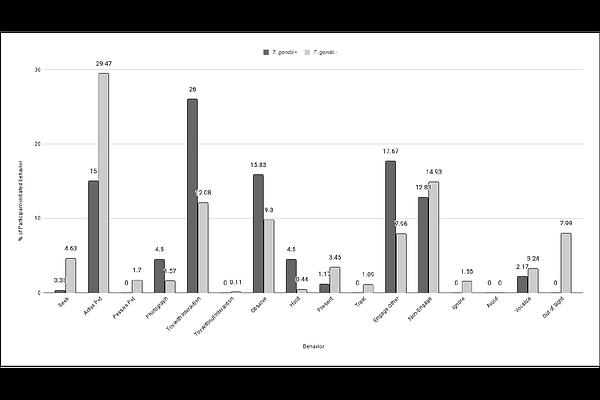
AbstractParasitism is one of the key, structural, interspecific interactions in ecology. One remarkable parasitic strategy that has been documented in multiple systems is the behavioral manipulation of hosts to increase parasite fitness. While not yet documented in humans, we propose that a ubiquitous zoonotic parasite, Toxoplasma gondii, may change human behavior to favor the parasite by increasing the fitness of the definitive host - cats. Specifically, we assess the possibility that human behavioral changes resulting from chronic, latent T. gondii infection lead to measurable changes in attitudes, actions and dopaminergic responses towards cats that function to increase domestic cat fitness. We assessed the potential role of humans in the T. gondii lifecycle by identifying and testing behavioral changes in humans that benefit the parasite; specifically, human affection for cats. We assessed T. gondii infection status in 68 participants using T. gondii serum antibody testing, and assessed their attitudes towards cats in three ways: i) surveys, ii) participant behavior in the presence of domestic cats, and iii) participant oxytocin levels before and after interactions with cats to assess dopaminergic changes. Only 2 of 68 participants were positive for T. gondii antibodies, limiting statistical power. However, our results indicated that T. gondii-positive participants both reported a greater affection for cats in surveys, and spent more time engaged with cats during behavioral trials than T. gondii-negative participants (87% of study time engaging with cats vs 75%). Oxytocin results were inconclusive.