Patolakaturohiniyadi Kashayam, exerts anti-steatotic and anti-obesogenic effects via coordinated regulation of lipid metabolism, inflammation, and incretin signalling.

Patolakaturohiniyadi Kashayam, exerts anti-steatotic and anti-obesogenic effects via coordinated regulation of lipid metabolism, inflammation, and incretin signalling.
Kouser, S.; Kukkupuni, S. K.; Devkumar, P.; Chethala N, V.
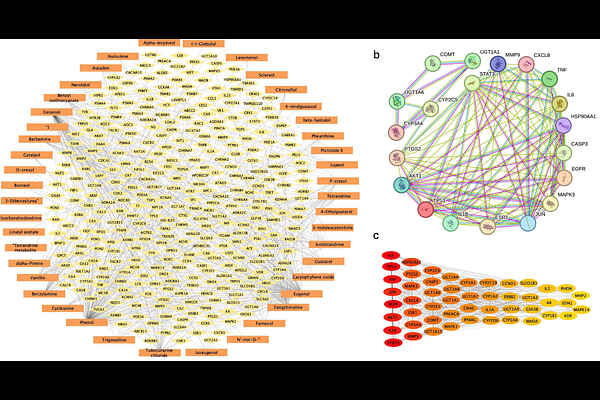
AbstractBackground: Metabolic dysfunction is characterized by dysregulated lipid metabolism, lipotoxicity, insulin resistance, and chronic low-grade inflammation, contributing to obesity and metabolic dysfunction-associated steatotic liver disease (MASLD). Multi-target therapeutic strategies that restore lipid homeostasis are of growing interest. Patolakaturohiniyadi Kashayam (PKR), a classical Ayurvedic polyherbal formulation, was investigated for its potential to modulate lipid metabolism and ameliorate metabolic dysfunction. Methods: An integrated approach combining network pharmacology, in vitro, lipidomics, and in vivo studies was employed. Hub gene identification and KEGG pathway enrichment were performed to elucidate molecular targets. Anti-steatotic and anti-adipogenic effects were assessed in hepatocytes and adipocytes, followed by lipidomic profiling. Efficacy was further evaluated in a high-fat high-fructose diet (HFHFD)-induced animal model. Results: Network pharmacology identified key targets including TP53, AKT1, IL6, TNF, and STAT3, enriched in pathways related to lipid metabolism, inflammation, and metabolic regulation. PKR significantly reduced lipid droplet accumulation and intracellular triglyceride levels in vitro. Lipidomics revealed suppression of diacylglycerol-mediated lipotoxicity and restoration of phospholipid balance, characterized by increased lysophospholipids and phosphatidylethanolamines with normalization of phosphatidylcholine species. In vivo, PKR reduced body, liver, and adipose tissue weights, improved serum lipid profiles, and decreased AST and ALT levels. Histological analyses demonstrated reduced lipid accumulation and inflammation, along with preservation of adipose tissue architecture. PKR also improved glucose tolerance and significantly elevated plasma GLP-1 levels. Conclusion: PKR exerts potent anti-steatotic and anti-obesogenic effects through coordinated regulation of lipid metabolism, inflammation, and incretin signalling, highlighting its potential as a multi-target therapeutics for metabolic dysfunction.