Antibody-drug conjugate combination therapy targeting LGR5 and MET with different payloads enhances efficacy in preclinical colorectal cancer models

Antibody-drug conjugate combination therapy targeting LGR5 and MET with different payloads enhances efficacy in preclinical colorectal cancer models
Subramanian, S.; High, P. C.; Guernsey-Biddle, C.; Cappellino, M. G.; Liang, Z.; Aldana, A. M.; Li, L.; Pan, S.; Carmon, K. S.
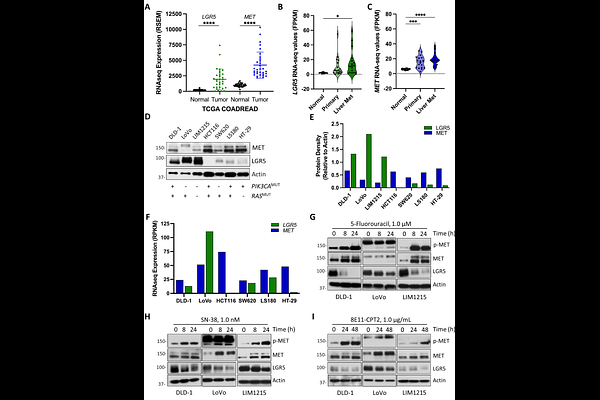
AbstractLeucine-rich repeat-containing G protein-coupled receptor 5 (LGR5) is a marker of cancer stem-like cells frequently upregulated in colorectal cancer (CRC) with lower expression in normal tissues, making it a favorable target for antibody-drug conjugates (ADCs). ADCs combine antibody specificity with potent cytotoxic payloads to enhance efficacy while minimizing systemic toxicity. LGR5-targeting ADCs incorporating different payloads demonstrate strong initial tumor inhibition, yet tumors eventually recur due in part to LGR5 downregulation, necessitating more effective strategies to prevent relapse. We show treatment with chemotherapies or an LGR5-targeting ADC coupled to a topoisomerase 1 inhibitor payload (8E11-CPT2) reduces LGR5 levels and increases MET receptor expression and/or activation in CRC cells, supporting a therapeutic approach to target LGR5 and MET simultaneously. Accordingly, we engineered a MET-targeting ADC (ABT-700-SG3199) via site-specific conjugation of the anti-MET antibody telisotuzumab (ABT-700) with the DNA-crosslinking pyrrolobenzodiazepine (PBD) dimer SG3199. ABT-700-SG3199 exhibited superior potency and efficacy in CRC models compared to the clinical-stage MET-targeting ADCs ABBV-399 and ABBV-400, which use the same antibody backbone conjugated to different payloads. Treatment with ABT-700-SG3199 increased LGR5 expression, and the combination of ABT-700-SG3199 with 8E11-CPT2 enhanced CRC cell-killing efficacy, reinforcing the rationale for a dual-targeting approach. In patient-derived xenografts, combined administration of 8E11-CPT2 and ABT-700-SG3199 markedly delayed tumor relapse and prolonged survival compared with single-agent treatment. Taken together, these findings reveal a reciprocal regulation between MET and LGR5 in response to LGR5- or MET-targeting ADCs in CRC models and support a LGR5/MET dual-targeting therapeutic strategy to enhance efficacy and potentially overcome resistance and relapse.