Minimal Data, Maximal Insight (MDMI): A Structure-guided Pipeline for Discovering Functional Alternatives in Peptide-Protein Interfaces

Minimal Data, Maximal Insight (MDMI): A Structure-guided Pipeline for Discovering Functional Alternatives in Peptide-Protein Interfaces
Bayat, P.; Perkins, S. J.; Clancy, S.; Patel, S. S.; Yin, R. F.; Bozovicar, K.; Singh, S.; Shrestha, S.; Moustafa, Z.; Zayani, R.; IWE, I.; Bayat, S.; Kelly, P.; Vigar, J. R. J.; White, V. Y.; Xie, M.; Simchi, M.; Palter, S.; Nguyen, J.; Zeisler, I. Y.; Wu, B.; Pardee, K.
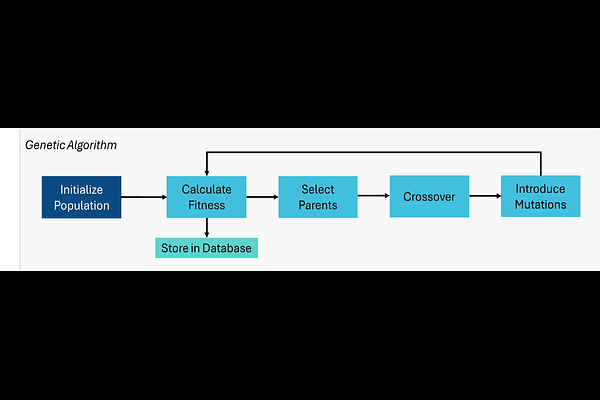
AbstractDiscovering functional peptides across vast sequence space remains a formidable challenge, particularly when experimental training data is scarce. We present Minimal Data Maximal Insight (MDMI), a two-stage structure-guided computational pipeline that designs functional peptide variants using only a small, annotated dataset. Rather than relying on sequence information alone, MDMI integrates three-dimensional structural features derived from predicted peptide-protein complexes into a machine learning model that captures interface geometry and binding energetics. This structure-aware predictor, paired with a genetic algorithm for sequence exploration, reduced false positives from 70% to close to zero in an all-negative benchmark panel compared with a sequence-only model in computational benchmarking, and produced approximately four-fold more high-confidence in silico binders than state-of-the-art peptide/protein design baselines. Using the split-GFP system as a testbed, where fluorescence provides a direct functional readout of peptide-protein complementation, MDMI identified peptides with up to 38% sequence divergence from wild-type in Stage 1 while retaining measurable activity. In Stage 2, motif-guided recombination of successful Stage 1 variants produced highly divergent yet functional peptides bearing over 50% sequence difference from wild-type, revealing two distinct functional clusters in sequence space. As further validation, a top-performing candidate expressed as a full-length GFP fusion retained a GFP-like emission profile, supporting formation of a fluorescent GFP-like scaffold. These results demonstrate that structure-informed pipelines can uncover remote functional sequence space from minimal data, with broad implications for peptide and therapeutic analog discovery.