Optimization of the glucosinolate core pathway for production of simple glucosinolates in Escherichia coli

Optimization of the glucosinolate core pathway for production of simple glucosinolates in Escherichia coli
Poborsky, M.; Crocoll, C.; Halkier, B. A.
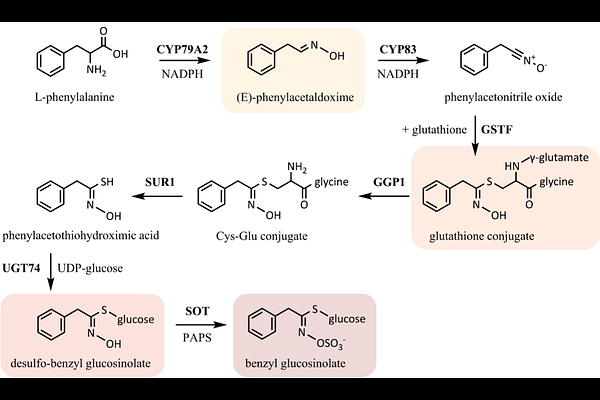
AbstractMicrobial biosynthesis of plant secondary metabolites aims to provide access to compounds of medicinal or industrial value independently of the native plant. Glucosinolates are plant secondary metabolites characteristic of brassicaceous plants and recognized as promoters of human health. However, plants often contain a complex mixture of glucosinolates with insufficient amounts to elicit a clinical effect through diet. Here, we demonstrate the biosynthesis of defined glucosinolate products in Escherichia coli through combinatorial screening of pathway enzyme homologs, tailoring the optimal biosynthetic route for each individual product. To achieve high product titers, we establish efficient P450 expression by membrane anchor truncation and engineer sulfate assimilation to increase the supply of a sulfate donor 3'-phosphoadenosine-5'-phosphosulfate. We use benzyl glucosinolate pathway as a model to test the engineering strategies and improve the titer 37-fold over our previous study. Extrapolating the best approaches to other simple glucosinolates, we establish the first microbial synthesis of tyrosine-derived p-glucosinolate. Showing the highest titer overall, we report production of 1250 uM indolyl-3-methyl glucosinolate, a 500-fold increase over biosynthesis in yeast.