CCR5/CCL5 Links Mitochondrial Dysfunction to Angiotensin II Vascular Injury

CCR5/CCL5 Links Mitochondrial Dysfunction to Angiotensin II Vascular Injury
Pimenta, G. F.; Bruder, A.; Beling, T.; Tirapelli, C. R.; Bruder-Nascimento, T.
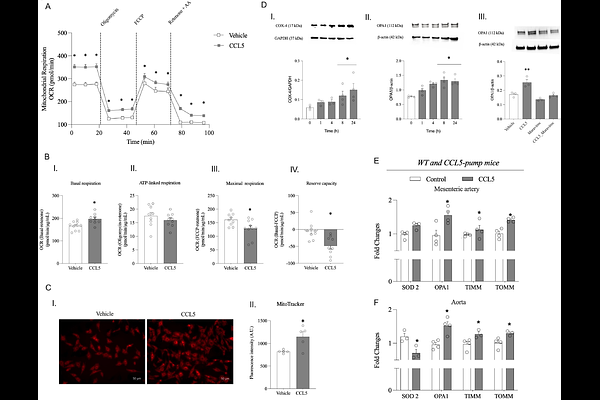
AbstractBackground: Chemokine signaling contributes to vascular inflammation and dysfunction in hypertension. CCL5 (C-C motif chemokine ligand 5) has been implicated in angiotensin II (Ang II)-induced vascular injury; however, the intracellular mechanisms linking CCL5/CCR5 (C-C chemokine receptor type 5) activation to vascular dysfunction remain unclear. We hypothesized that Ang II amplifies vascular CCL5/CCR5 signaling, leading to mitochondrial dysfunction and oxidative stress that promote vascular impairment. Methods: Wild-type and CCR5-deficient mice were infused with Ang II for 14 days. Separate cohorts received recombinant CCL5 at concentrations comparable to those observed after Ang II infusion. Vascular reactivity and remodeling were assessed in the aorta and mesenteric arteries. Mitochondrial respiration, membrane potential, and reactive oxygen species (ROS) production were evaluated in vascular smooth muscle cells (VSMCs). Pharmacological inhibition of CCR5, mitochondrial ROS scavenging, and mitochondrial uncoupling were used to define underlying mechanisms. Results: Ang II increased circulating CCL5 and upregulated CCR5 expression in vascular tissues and VSMCs. CCR5 deficiency protected against Ang II-induced vascular dysfunction, remodeling, and inflammation. CCL5 infusion impaired endothelium-dependent relaxation and enhanced contractility without inducing structural remodeling. In VSMCs, CCL5 disrupted mitochondrial respiration, reduced maximal respiratory capacity, altered membrane potential, and increased mitochondrial ROS in a CCR5-dependent manner. Mitochondrial antioxidant treatment restored endothelial function but did not normalize enhanced contractility. Conclusions: Ang II amplifies CCL5/CCR5 signaling, promoting CCR5-dependent mitochondrial dysfunction and oxidative stress that contribute to vascular impairment. Targeting this mitochondrial inflammatory axis may represent a therapeutic strategy in hypertension.