Population collapse of the Egyptian fruit bat on Cyprus (2005-2022) was likely driven by roost disturbance and declining food availability linked to climate change

Population collapse of the Egyptian fruit bat on Cyprus (2005-2022) was likely driven by roost disturbance and declining food availability linked to climate change
Lucan, R. K.; Nicolaou, H.; Bartonicka, T.; Bachorec, E.; Salek, M.; Rerucha, S.; Jedlicka, P.; Erotokritou, E.; Horacek, I.
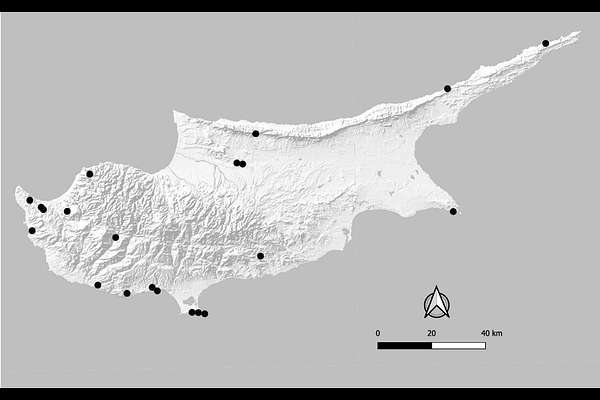
AbstractPeripheral island populations are often especially vulnerable to environmental change, yet they may also represent unique components of biodiversity. We assessed long-term population change in the Egyptian fruit bat (Rousettus aegyptiacus) on Cyprus, the only insular and geographically isolated population of this pteropodid in Europe, and evaluated two non-exclusive explanations for its decline: roost disturbance and reduced food availability. We analysed roost counts from 21 underground sites monitored between 2005 and 2022 and modelled temporal trends in commercially produced fruits used by the species. The monitored population declined from c. 7200 to c. 1050 individuals, corresponding to an estimated decrease of 85.4%. The decline was steepest during 2005-2011, slowed during 2012-2017, and was followed by partial recovery in 2018-2022. Colonies in easily accessible roosts declined significantly faster than those in less accessible roosts, consistent with an important role of human disturbance. Fruit production showed strong long-term declines and multiple structural breaks clustered in the mid-2000s, coinciding with the most severe phase of population decline and a major drought period on Cyprus. The fate of the missing portion of the population remains uncertain. Although large-scale mortality cannot be excluded, there was no clear evidence of widespread starvation-related mortality, and emigration to nearby mainland areas remains a plausible but untested explanation. Overall, our results indicate that the collapse of this peripheral island population was most likely driven by a combination of roost disturbance and reduced food availability associated with climate-related environmental change, highlighting the urgent need for strict roost protection and measures to secure food and water resources.