Derivatization of the non-ribosomal peptide pyrrolizixenamide using NRPS engineering

Derivatization of the non-ribosomal peptide pyrrolizixenamide using NRPS engineering
Effert, J.; Calderari, A.; Kremer, S.; Weissman, K. J.; Bode, H. B.
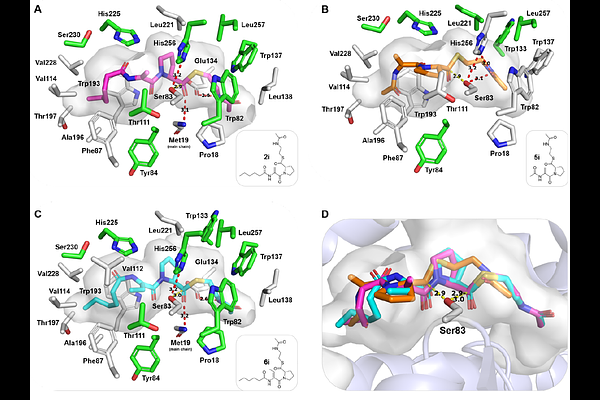
AbstractPyrrolizidine alkaloids (PA) are well-known and widespread natural products from plants, which have also been identified in several different bacteria. In the latter case, the core structure is constructed by a non-ribosomal peptide synthetase (NRPS), which then undergoes oxidative ring contraction catalyzed by a Baeyer-Villiger monooxygenase. By deploying various NRPS engineering strategies, we have successfully generated five novel peptides carrying the unusual PA moiety at their C-terminus. Nonetheless, efforts to obtain a larger library of PAs were unsuccessful. Combined computational modelling and docking experiments suggest that this failure stems from the strict specificity of the thioesterase (TE) domain at the end of the NRPS, which discriminates against peptides carrying more than two amino acids. Our work thus suggests protein design strategies by which this intrinsic limitation to NRPS engineering may be overcome in future.