Site-specific cholesterol depletion therapy for gastric cancer

Site-specific cholesterol depletion therapy for gastric cancer
Kavrakova, S.; Sharma, A.; Ristevska, E.; Guo, X.; Zalejski, J.; Cho, W.
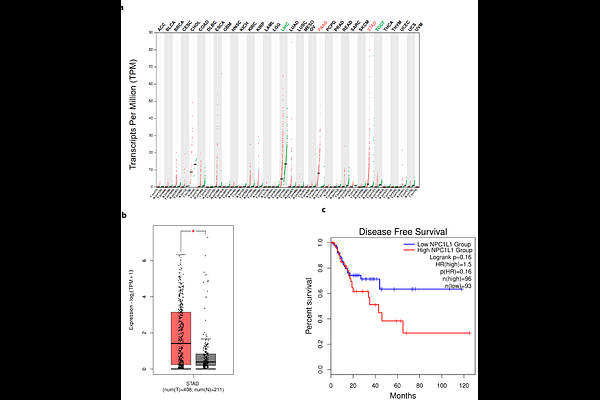
AbstractAltered cholesterol metabolism is a recognized hallmark of cancer, but systemic modulation has not yet delivered significant clinical results. Accumulating evidence shows that cholesterol plays distinct roles across diverse cellular membranes, suggesting that site-specific modulation may produce superior therapeutic outcomes. Cholesterol is associated with gastric cancer (GC), but the mechanistic link is complex and no effective cholesterol-targeted therapy has been developed. Here, we report that cholesterol levels in GC cells are site-specifically elevated in the inner leaflet of the plasma membrane (IPM). This elevated IPM cholesterol constitutively activates Wnt-{beta}-catenin signaling to drive cell survival and proliferation. Mechanistically, Niemann-Pick C1-like 1 (NPC1L1), which is highly expressed in GC patient tissues and cell lines, acts as a cholesterol flippase to raise IPM cholesterol levels, facilitating ligand-independent {beta}-catenin signalosome formation. Ezetimibe, a clinically approved NPC1L1 inhibitor, blocks this flippase activity, lowers IPM cholesterol levels, and suppresses {beta}-catenin signaling. Ezetimibe treatment induces apoptosis in GC cells while sparing normal primary gastric epithelial cells, which exhibit low levels of NPC1L1 and IPM cholesterol. Collectively, these results suggest that site-specific modulation of cellular cholesterol is a viable approach to developing safe and effective therapies for cancers linked to local cholesterol elevation.