Top predators in soil food webs increase carbon cycling efficiency

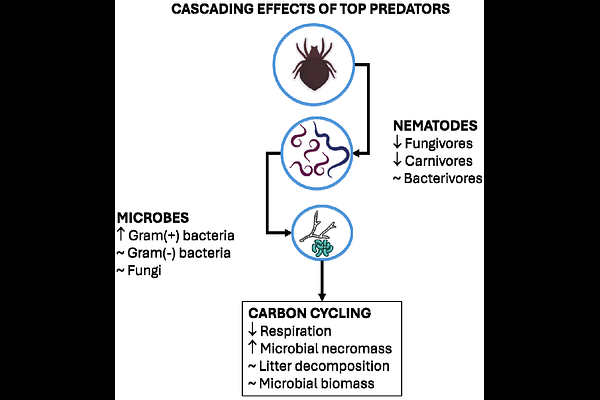
Top predators in soil food webs increase carbon cycling efficiency
Lejoly, J. D. M.; van Hoof, E.; Wang, Y.; Favre, V.; Quist, C.; Geisen, S.; Veen, C. G. F.
AbstractSoil microbes are considered central in litter decomposition and soil carbon formation. Microbial activity and abundance are controlled by microbivores, which are themselves preyed upon by top predators. However, the role of top predators in carbon cycling is rarely studied, especially in bacterivore-dominated food webs. Here we tested how trophic cascades, consisting of microbes, microbivores (bacterivore-dominated nematode communities) and top predators (nematode-feeding mites) impact carbon cycling and associated microbial pools and processes. We found that our model top predator decreased the abundance of fungivorous nematodes and had cascading effects on microbiome composition, notably increasing Gram-positive bacterial biomass, thus promoting the bacterial energy channel. These trophic cascades propagated to carbon cycling, decreasing heterotrophic respiration by 10% while maintaining litter decomposition rates. Taken together, our results suggest that top predators increase carbon cycling efficiency and highlight the importance of complex trophic interactions, including trophic cascades, in determining soil carbon cycling.