Membrane progesterone receptor signaling reverses hyperglycemia and insulin resistance in obese mice

Membrane progesterone receptor signaling reverses hyperglycemia and insulin resistance in obese mice
Nader, N.; Zarif, L.; Sherif, S.; Al Hamaq, J.; Al Qahtani, D.; Courjaret, R.; Yu, F.; Abunada, H. H.; Vemulapalli, P. B.; Choi, S.; Schmidt, F.; Machaca, K.
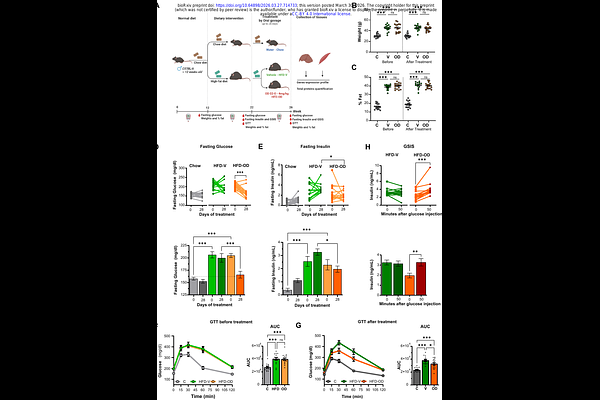
AbstractProgesterone (P4) plays key roles in reproductive and metabolic function and signals through two receptor classes: classical nuclear receptors that regulate gene transcription and membrane progesterone receptors (mPR) that mediate rapid, non-genomic signaling. Whether mPR signaling influences systemic glucose homeostasis remains unclear. Here, we investigated whether mPR activation regulates glucose homeostasis and insulin sensitivity. Using the selective mPR agonist OD02-0, we show that mPR activation enhances glucose uptake in skeletal muscle and hepatocytes, associated with AMP-activated protein kinase (AMPK) activation. In HepG2 cells, mPR activation induces metabolic reprogramming characterized by reduced mitochondrial respiration and increased glycolytic flux. Pharmacological inhibition of AMPK suppresses this effect, indicating that these responses require AMPK activity. In diet-induced obese mice, chronic mPR activation reduces fasting glucose and insulin levels, improves glucose tolerance, and restores glucose-stimulated insulin secretion without detectable toxicity. Integrated proteomic and phosphoproteomic analyses in mouse liver reveal modulation of AMPK signaling and inhibition of mTORC1. Transcriptomic changes were limited, supporting a predominantly non-genomic mode of action. Together, these findings identify mPR signaling as a regulator of glucose homeostasis that engages central energy-sensing pathways to improve metabolic control in obesity.