Circadian immunometabolic states impart a temporal response to SARS-CoV-2 spike proteins in mammalian macrophages

Circadian immunometabolic states impart a temporal response to SARS-CoV-2 spike proteins in mammalian macrophages
Buel, S. M.; Balaraman, J.; Jankowski, M. S.; Hixson, K. K.; Gao, Y.; Kim, Y.-m.; Munoz, N.; Kyle, J. E.; Lipton, M. S.; Nicora, C. D.; Piehowski, P. D.; Baker, S. E.; Hurley, J. M.
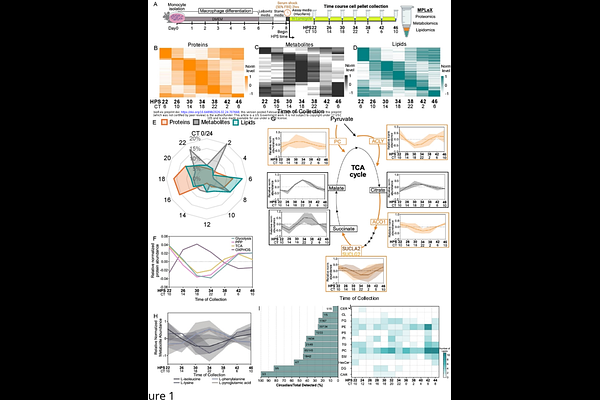
AbstractCircadian rhythms, driven by 24-hour molecular oscillators, or "clocks", widely tune physiology to the daily rhythms of light and dark to enhance organismal fitness. In mammals, the cellular immune response is tightly regulated by these rhythms such that immunometabolic output is coordinated across the day, consolidating macrophage physiology into temporally distinct phases that determine the macrophage response to stimuli. Importantly, key proteins in the macrophage response to viral infection have been found to be under circadian control, and time of day of adjuvant application is known to affect the efficacy of vaccinations, including in the case of the SARS-CoV-2 virus. However, little is known about the molecular changes that underly the temporal response to vaccine application. Therefore, to investigate the circadian response of macrophage physiology to adjuvant exposure, we exposed primary mouse and human macrophages to the SARS-CoV-1 and CoV-2 spike proteins at different times over the circadian day. To further explore the time-of-day effect, we performed a multi-omics analysis and in vitro tissue culture assays examining macrophage responses over circadian time. We found that, conserved across the species, the timing of spike protein exposure dictated two distinct temporal responses which were characterized by hallmarks of immunometabolic suppression and modest immunometabolic activation. Intriguingly, these temporal responses were driven by central metabolic and mitochondrial changes rather than classical immune activation, suggesting immunometabolic control is a primary regulator of the temporal response of immune cells to stimuli.