Pancreatic cancer-associated organ dysfunction promotes muscle autophagy and contributes to peripheral tissue wasting

Pancreatic cancer-associated organ dysfunction promotes muscle autophagy and contributes to peripheral tissue wasting
Gultekin, Y.; Sivanand, S.; Eghbalian, K. M.; Barbeau, A. M.; Abbott, K. L.; Eng, G.; Tavernier, V. L.; Do, B. T.; Shin, H.; Ozcelik, E.; Hu, S.; Kunchok, T.; Waite, M.; Rideout, W. M.; Kizlier, Y. K.; Sharygin, D. A.; Freed-Pastor, W.; Jacks, T.; White, E.; Yilmaz, O. H.; Nowak, J. A.; Wolpin, B. M.; Vander Heiden, M. G.
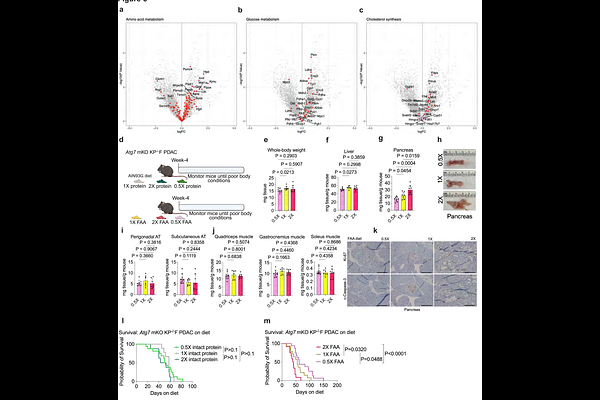
AbstractNormal pancreas function supports both digestion and the hormonal regulation of whole-body metabolism. We find pancreatic ductal adenocarcinoma (PDAC) disrupts the normal function of the remaining pancreas, leading to altered systemic metabolism and peripheral tissue wasting that begins early in disease progression. Using mouse models of PDAC, we find small pancreas tumors lead to both endocrine and exocrine pancreatic dysfunction that results in systemic nutrient depletion and loss of both muscle and fat tissue. Providing free glucose in the diet that is absorbed despite pancreatic exocrine dysfunction causes hyperglycemia and blunts fat wasting without affecting muscle loss. Muscle mass can be restored by free dietary amino acids or pancreatic enzyme supplementation. Exocrine dysfunction causing reduced dietary protein digestion promotes muscle proteolysis and autophagy. Autophagy is a major driver of muscle wasting in PDAC, as muscle-specific deletion of the core autophagy gene Atg7 also reduces muscle wasting. Disrupting muscle autophagy without restoring systemic nutrition slows tumor growth and improves survival of mice with PDAC. Tracing the fate of amino acids released from muscle of mice with PDAC shows redistribution to both tumor and host tissues. Notably, improving nutrition in mice with disrupted muscle autophagy promotes tumor growth. Together, the data argue that early peripheral tissue wasting associated with early pancreatic cancer is driven by altered normal pancreatic organ function that leads to reduced nutrition and enhanced muscle autophagy, releasing nutrients to support both tumor and host metabolism.