Exposure to herbivore-induced plant volatiles directly induces jasmonic acid and primes chemical defences in cotton plants

Exposure to herbivore-induced plant volatiles directly induces jasmonic acid and primes chemical defences in cotton plants
Altermatt, K.; Ye, W.; Vallat, A.; Abdala-Roberts, L.; Turlings, T.; Bustos-Segura, C.
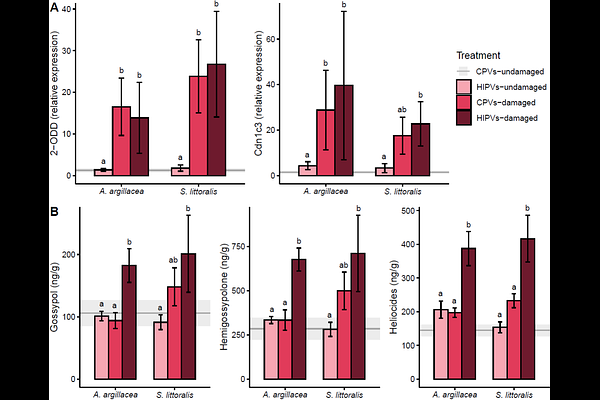
AbstractPlants can deploy alternative defensive strategies in response to airborne signals from damaged neighbours to prepare for incoming attack: a straightaway response up-regulating their defences (induction), or a primed state, leading to a faster/stronger defence response after herbivory. However, it is unclear which mechanisms are involved in each response. We used a monophagous and a polyphagous leafworm species to specifically dissect induction and priming effects of exposure to herbivore-induced plant volatiles (HIPVs). Exposure to HIPVs directly elevated jasmonate levels in undamaged receivers but did not induce defensive terpenoids or volatiles. However, HIPV-primed plants accumulated high levels of toxic terpenoids (e.g. gossypol) and emitted high quantities of volatile sesquiterpenes, when damaged by either species of caterpillars. This comprehensive study demonstrates that both defence induction and priming can be detected in cotton but occur as different, linked responses which are robust to herbivore identity, providing insights into a generalised plant communication strategy.