Beyond abstract selection coefficients: Protandry impacts the buildup of heterozygote advantage over the lifespan in a color polymorphic moth

Beyond abstract selection coefficients: Protandry impacts the buildup of heterozygote advantage over the lifespan in a color polymorphic moth
Selenius, E.; Keaney, T.; Winters, S.; Mappes, J.; Kokko, H.
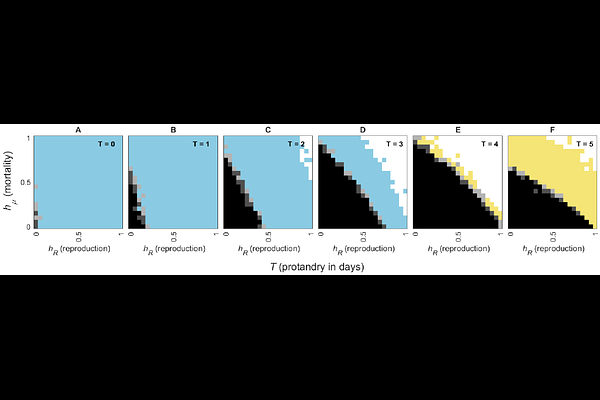
AbstractPopulation genetic models excel at identifying the conditions for polymorphisms based on balancing selection but typically disregard the ecological processes that yield particular values of selection coefficients. We model a system that combines antagonistic pleiotropy, dominance reversal and heterozygote advantage: the wood tiger moth Arctia plantaginis, where alternative haplotypes at a major-effect locus determine male hindwing coloration. Yellow offers better protection against predators, while white is often associated with better mating success. The effects of mortality and reproductive success overlap in time because protandrous males can mate as long as they are alive, but they need to avoid predation for several days before the bulk of females emerge. We show that protandry aids polymorphism maintenance whenever the second-fittest genotype (after the heterozygote) is the poorly surviving but mating advantaged homozygote, while increased protandry harms polymorphism when the second-best fitness is that of the survival advantaged morph. Ecologically plausible protandry times predict that dominance reversal does not have to be strong for polymorphism to be maintained. Our study highlights the importance of timing traits in maintaining polymorphisms in Lepidoptera and showcases the benefits of deriving fitness explicitly in place of abstract selection coefficients that lack temporal components within the life cycle.