Spatially resolved gene expression analysis illuminates location-specific functions in the reef-building coral Pocillopora acuta

Spatially resolved gene expression analysis illuminates location-specific functions in the reef-building coral Pocillopora acuta
Dellaert, Z.; Putnam, H. M.
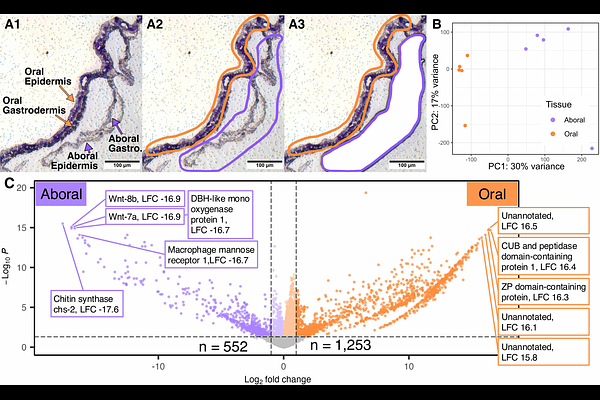
AbstractReef-building coral polyps contain multiple specialized tissue types with distinct functions, from feeding and defense to symbiosis and skeleton formation. While these cell types have been characterized microscopically and more recently via single-cell RNA sequencing, spatially resolved high-throughput gene expression profiling remains limited in corals. Here we combine Laser Capture Microdissection with RNA sequencing to characterize tissue-specific gene expression in the reef building coral Pocillopora acuta. Oral tissues, adjacent to the seawater, exhibited 1,253 upregulated genes enriched for amino acid synthesis, transmembrane transport, signaling, environmental sensing, and secretion. These tissues showed high expression of immune and microbial-recognition genes consistent with their interface with seawater microbiota: mucins, lectins, toll-like receptors (TLRs), and MyD88 that connects TLRs to the NF-KB pathway. Aboral tissues, which build the coral's skeleton, exhibited 552 upregulated genes enriched for developmental processes, cell adhesion, and stimulus response. We identified strong differential expression of biomineralization- associated genes, including Chitin Synthase and Wnt pathway members, suggesting previously underdescribed roles in skeleton formation. Critically, many genes implicated in specialized functions were expressed in multiple tissues. This lack of location specificity suggests functional biomarkers will likely entail multi-gene expression patterns rather than single genes. Collectively, we highlight the need for greater spatial resolution (e.g., single cell/nuclei and spatial transcriptomics) to fully resolve coral responses within their native tissue complexity. As anthropogenic climate change increasingly threatens coral reefs, spatially resolved molecular insight into coral biology will be critical for interpreting stress response mechanisms, forecasting their limits, and applying human interventions.