Morphological and Functional Effects of Cytoskeletal and Ion-Channel Agents on the Protoscolex of Echinococcus granulosus sensu lato

Morphological and Functional Effects of Cytoskeletal and Ion-Channel Agents on the Protoscolex of Echinococcus granulosus sensu lato
Carabajal, M. P. A.; Fernandez Salom, M. J.; Martinez, L. J.; Marcial, E. R.; Albarracin, V. H.; Cantiello, H. F.
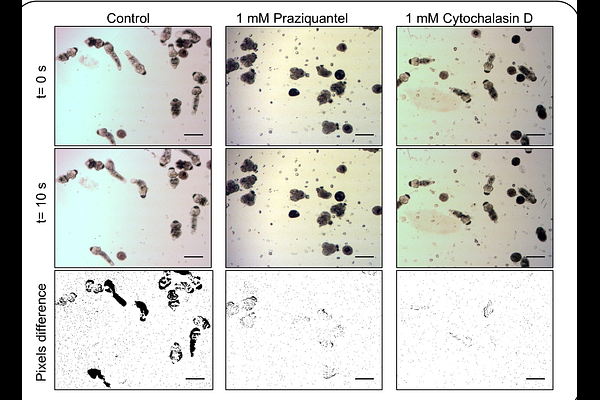
AbstractHelminthiases remain a major global health burden, and limitations of current anthelmintic therapies highlight the need for new pharmacological targets. In this study, we examined the effects of ion-channel and cytoskeletal modulators on bovine lung protoscoleces (PSCs) of Echinococcus granulosus sensu lato . Compounds acting on ion channels (praziquantel, amiloride, and amlodipine) and cytoskeletal components (albendazole and cytochalasin D) were evaluated using a semi-automated motility assay, methylene blue exclusion to assess viability, and scanning electron microscopy (SEM) to characterize structural damage. All compounds produced concentration-dependent reductions in PSCs' motility. Amlodipine was the most potent inhibitor of motility, whereas praziquantel and cytochalasin D produced pronounced tegumental alterations and strong correlations between motility impairment and parasite death. In contrast, amiloride markedly reduced motility with comparatively minor effects on viability, indicating a primarily paralytic effect. Cytoskeletal disruption induced severe structural damage and parallel declines in motility and viability. SEM analysis revealed extensive tegumental collapse, loss of glycocalyx, and microtrichial damage in PSCs exposed to cytoskeletal and calcium-modulating agents. These findings highlight cytoskeletal organization and calcium-dependent ion fluxes as key physiological vulnerabilities in E. granulosus. Comparative analysis of these pharmacological targets provides mechanistic insight into how disruptions in cytoskeletal dynamics and cation homeostasis compromise parasite motility and survival.