Built-in integrated living electronics: from biosynthesis tomodulation of neuronal function

Built-in integrated living electronics: from biosynthesis tomodulation of neuronal function
Tommasini, G.; Iencharelli, M.; Santillo, S.; Schaefer, P. S.; Intartaglia, D.; Blasio, M.; Preziosi, G.; Ferrara, M. A.; Sanita, G.; Esposito, E.; Coppola, G.; Zangoli, M.; Di Maria, F.; Tino, A.; Moros, M.; Tortiglione, C.
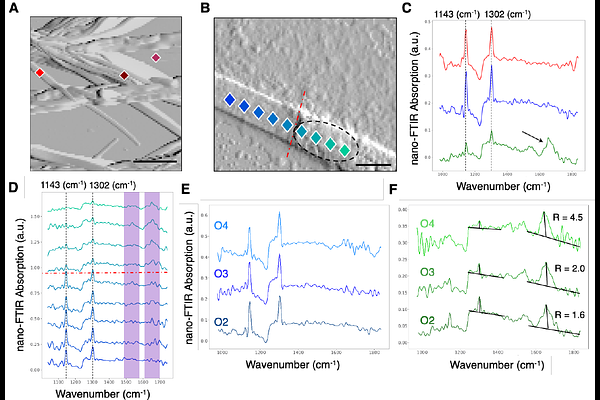
AbstractNeuroelectronic interfaces hold great promise to restore functions in neurological disorders or motor dysfunctions, but current devices struggle to integrate seamlessly within living tissues. Here we report a transformative approach to create bionic neurons that autonomously build integrated fluorescent fibrils and demonstrate their role as neuromodulators. Using a combination of cell biology, ultrastructural, imaging and nanospectroscopical approaches, we deciphered the unique biosynthetic pathway employed by the cells to self-fabricate these nanoelectronics and uncover their hybrid structure. Importantly, patch clamp recordings revealed their neuromodulatory potential, through the perturbation of membrane electrical properties and the early rising phase of the action potential. Deciphering how basic molecular elements self-organize into complex architectures within biological environments could unlock the ability to engineer natural electroactive systems directly inside living organisms. This capability could be used to create conductive pathways between arbitrarily defined neurons, microcircuits, or nervous system regions, effectively writing connections into living brains.