A propensity to hyperinsulinaemia underpins diet-induced diabetes in NODk mice

A propensity to hyperinsulinaemia underpins diet-induced diabetes in NODk mice
Waters, M. F.; Hussain, A.; Delghingaro-Augusto, V.; Shamoon, M.; Bansal, A.; Feng, Z.-P.; Andrews, T. D.; Dagpo, T.; Koina, M. E.; Dahlstrom, J. E.; Nolan, C. J.
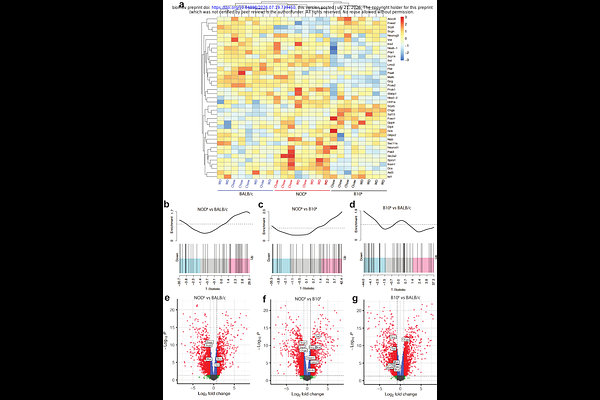
AbstractAims/hypothesis: Heterogeneity in the pathophysiology of type 2 diabetes is increasingly being realised. The currently available rodent models of type 2 diabetes all have limitations and do not accurately reflect all human type 2 diabetes subtypes. NOD.BR-H2k/Wicker mice (NODk), derived from the non-obese diabetic (NOD) mouse, are type 1 diabetes resistant. However, transgene induced beta-cell stress in male NODk mice induces hyperinsulinaemia followed by diabetes. Here we have investigated the propensity of NODk mice to develop a Western-diet (WD) induced hyperinsulinaemic subtype of type 2 diabetes. Comparator mouse strains used were BALB/c and B10.BR-H2k/SgSnJ mice (B10k). Methods: In the longer-term studies (14-24 weeks), NODk, B10k and BALB/c mice were randomised to receive Chow or WD from 4 weeks of age, followed by serial measurement of body weight and fed-state blood glucose. IPGTT and IPITT tests were conducted at 13 weeks of age. Blood and pancreas were harvested for further analyses at 14 and 24 weeks of age, or sooner if diabetes developed (blood glucose concentrations [≥]20 mmol/l on two consecutive days). In the acute studies, metabolic characteristics of the three strains at 8 weeks of age, continued on Chow or after a 5-day WD challenge (WDC) were assessed, along with harvesting pancreas on day 5 for ex vivo islet insulin secretion, electron microscopy, and bulk islet transcriptomics analyses. Results: Male WD-fed NODk mice became markedly hyperinsulinaemic, gained excess weight and developed a severe type 2 diabetes phenotype. Emergence of diabetes was associated with islet endocrine cell apoptosis and loss of beta-cell mass, without evidence of insulitis. Insulin resistance on IPITT testing, however, was not evident in Chow-fed NODk mice. In contrast, male B10k mice already had poor glucose tolerance on Chow diet and, despite having a hypoinsulinaemic phenotype, were resistant to WD-induced diabetes. BALB/c mice developed very mild glucose intolerance and hyperinsulinaemia in response to the WD. Female NODk mice were diabetes resistant. At 8 weeks of age, male Chow-fed NODk mice were mildly hyperinsulinaemic despite relative hypoglycaemia compared to the other strains. The acute 5-day WDC markedly increased hyperinsulinaemia in NODk mice. Transcriptomics analyses identified robust strain-specific differences, including altered islet cell differentiation, energy metabolism, endoplasmic reticulum to golgi vesicle transport and insulin processing. Conclusions/interpretation: NODk mice, which exhibit mild hyperinsulinaemic hypoglycaemia on Chow diet and rapidly develop marked hyperinsulinaemia on WD, are type 2 diabetes prone. In contrast, B10k mice have poor glucose tolerance on Chow diet and no or limited capacity to increase insulinaemia in response to WD, are diabetes resistant. These findings support the hypothesis that hyperinsulinaemia is upstream to insulin resistance in the pathogenesis of severe insulin resistant subset of type 2 diabetes for which the WD-fed NODk mouse is a suitable new mouse model.