RNA degradation by ribonuclease T2 is required for phosphate homeostasis in S. cerevisiae

RNA degradation by ribonuclease T2 is required for phosphate homeostasis in S. cerevisiae
Kee, A. M.; Jahan, N.; McFall, D. J.; Briggs, C.; Girard, L. R.; Spiese, S.; Garcia, J. F.
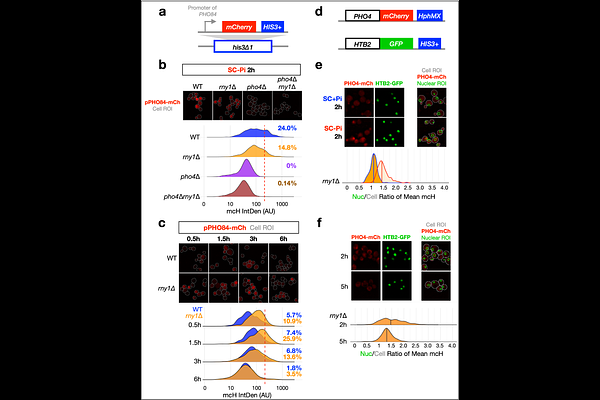
AbstractInorganic phosphate (Pi) is a critical building block for key biomolecules including ATP, DNA, RNA, and phospholipids. Consequently, cells monitor phosphate levels and acquire phosphate when intracellular levels become low. Here we demonstrate an unanticipated connection between the enzymatic activity of the S. cerevisiae RNase T2 ortholog, Rny1, and inorganic phosphate availability. Rny1 has been studied for its role in autophagy-linked RNA degradation under starvation conditions. Here we find that in nutrient-rich conditions, cells lacking Rny1 function exhibit phosphate starvation phenotypes and aberrantly activate the PHO signaling pathway despite the presence of high levels of inorganic phosphate in the growth media. This activation is evidenced by increased PHO gene transcript levels and increased nuclear localization of Pho4 in rny1{Delta} strains. Complementation of rny1{Delta} with wild-type RNY1 and human RNase T2 restores PHO transcript levels to those typically observed in exponentially growing cells. This implicates RNase T2-dependent RNA degradation as required for maintaining intracellular phosphate levels, even under phosphate-replete conditions. Furthermore, consistent with its potential role in freeing phosphate from degraded RNA, RNY1 expression is itself further induced under phosphate-limited conditions. These observations suggest that RNase T2-mediated RNA decay is a part of a potentially conserved metabolic recycling pathway that provides Pi to growing cells. These findings reframe RNA as a key metabolic resource and positions RNase T2 enzymes, and their function in RNA degradation, as an unexpected player in phosphate homeostasis.