Depletion of astrocyte inflammatory pathway in the arcuate nucleus of the hypothalamus is sufficient to prevent the diet-induced metabolic alterations of polygenically predisposed obese rats

Depletion of astrocyte inflammatory pathway in the arcuate nucleus of the hypothalamus is sufficient to prevent the diet-induced metabolic alterations of polygenically predisposed obese rats
Bouchat, A.; Papini, L.; Schlaepfer, J.; Kulka, P.; Le Foll, C.
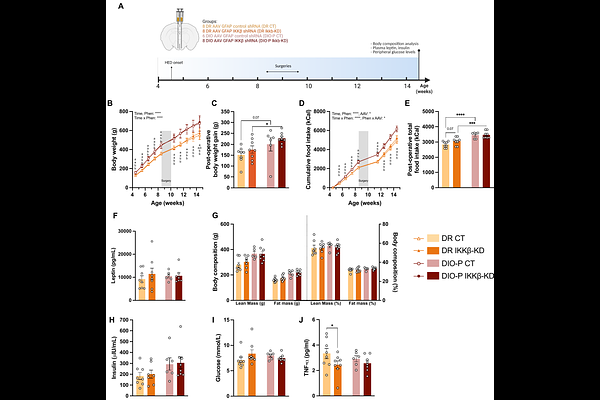
AbstractSelectively bred diet-induced obesity-prone (DIO-P) rats have defective nutrient sensing prior to obesity onset. We hypothesized that glial inflammation in the arcuate nucleus (ARC) impairs hypothalamic responses to dietary clues, thereby promoting obesity development in genetically susceptible animals. This study established a timeline of inflammatory events in male and female DIO-P and diet-resistant (DR) rats fed either a low fat chow or exposed to a high energy diet (HED; 32% fat, 25% sucrose) for three days or four weeks. On chow diet, DIO-P rats of both sexes displayed elevated astrocyte density and increased expression of pro-inflammatory markers in the ARC, alongside reduced microglial content, compared to DR rats. Three days of HED transiently amplified most MBH pro-inflammatory markers in DIO-P rats. Four weeks of HED decreased GFAP expression in DIO-P rats while Iba1 density remained unchanged, whereas, DR rats showed a reduction in Iba1 with no change in GFAP or cytokine expression. To determine whether mediobasal hypothalamus (MBH) astrocyte inflammation contributes to the development and maintenance of an obesity, astrocytic IKK{beta} was depleted before or after HED exposure. Prophylactic MBH astrocyte-specific IKK{beta} knockdown prevented subsequent body weight gain, improved glucose tolerance and decreased leptin levels in DIO-P rats to levels comparable to DR rats, with no effect in the latter. In contrast, MBH IKK{beta} astrocytic depletion in already obese DIO-P rats had no effect on energy homeostasis. Together, these findings validate the DIO-P rat as a polygenic model of obesity predisposition and demonstrate that preventing ARC astrogliosis is sufficient to HED-induced body weight gain and obesity development in genetically susceptible animals, highlighting MBH inflammation as a marker and driver of obesity predisposition.