Identification and functional assessment of GPCRs across human adipogenesis

Identification and functional assessment of GPCRs across human adipogenesis
Wu, J.; Polkinghorne, M.; Liew, E.; Davies, I.; Davies, L.; Young, G.; Andrew, I.; Game, L.; Lazarus, K.; Ortega, P.; Ahmed, A. R.; Carling, D.; Tan, T. M.; Jones, B.; Pollard, A. E.
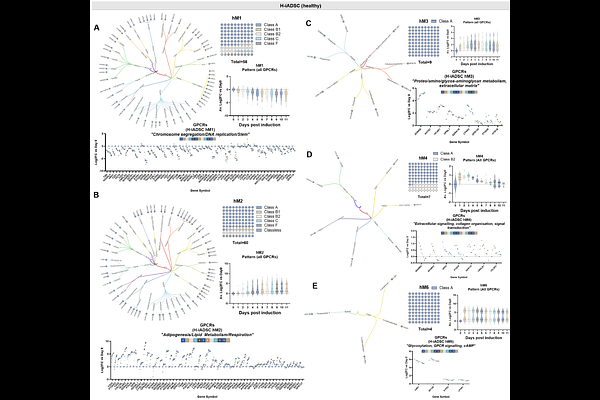
AbstractClinical obesity, defined as the presence of excess adiposity in conjunction with the presence of at least one clinical presentation of disease, remains a significant social and economic burden. Pharmacological weight loss agents based on glucagon-like peptide-1 receptor (GLP-1R) targeting are effective but exhibit significant side-effects leading to cessation of treatment, weight regain and, importantly, re-development of co-morbidities. Adipose tissue, now established as a central mediator of energy balance, endocrine signalling and inflammation, plays a significant role in the protection against metabolic disease onset. Loss of adipose tissue expandability, insulin sensitivity and function is thought to be a pivotal event in the transition to clinical obesity. Targeting adipose tissue dysfunction prior to or following development of metabolic disease remains a key therapeutic strategy either in conjunction with incretin-based weight loss therapy, or as a stand-alone therapy. The recent confirmation of functional glucose-dependent insulinotropic polypeptide receptor (GIPR) in mature adipocytes has led to a significant shift in our mechanistic understanding of dual GLP-1R/GIPR agonists such as tirzepatide, with the addition of adipocyte-specific targeting thought to underpin its clinical superiority to GLP-1R agonism alone. However, the expression, regulation and mechanistic targets of GIPR, and indeed many G protein-coupled receptors (GPCRs), in human adipocytes remains unclear, with adipocyte development being particularly under-studied in this regard. Here we use unbiased transcriptomic analyses of human adipocyte development with high temporal resolution to identify the onset of human GPCR expression, uncovering a previously undocumented surge in expression following adipogenic induction and elegant gene waves throughout adipocyte development that may provide attractive pharmacological targets for adipose tissue dysfunction with or without weight loss. We functionally characterise GIPR, GLP-1 and CALCR/RAMP (Amylin) receptor activation at key differentiation timepoints, and identify a novel amylin response in early adipogenesis, presenting committed adipogenic precursors as a primary target of amylin signalling.