Reactivating conflicting evaluative memories during sleep reduces decision ambivalence

Reactivating conflicting evaluative memories during sleep reduces decision ambivalence
Chen, D.; Xia, T.; Liu, J.; Zhang, Y.; Zuo, X.; Wu, H.; Lai, C. S. W.; Hu, X.
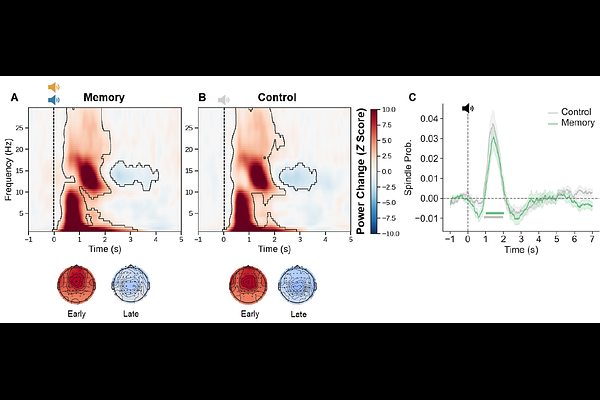
AbstractMemory guides everyday evaluations and decision-making. Yet people often encounter inconsistent information about the same target, giving rise to conflicting evaluative memories and decision ambivalence. Decision ambivalence is not only aversive but also reduces confidence, increases hesitation, and leads to maladaptive choices. While sleep consolidates memories, its role in resolving these evaluative conflicts and shaping decision dynamics remains unknown. Here, we investigated how memory reactivation during sleep, a critical period for memory consolidation and transformation, would reconstruct conflicting evaluative memories and thus influence next-day decision ambivalence. In a valence reversal learning procedure, participants first encoded positive or negative cue-outcome associations (A-B) on Day 1, followed by learning A-C associations yet with opposite valences on Day 2 (i.e., Day 1 negative-to-Day 2 positive and Day 1 positive-to-Day 2 negative). During subsequent non-rapid eye movement (NREM) sleep on Day 2 night, half of the cues were re-presented to sleeping participants to reactivate the cue-associated memories. Upon waking up, participants completed post-sleep evaluation and memory tests. Our results showed that cueing reduced decision ambivalence, especially in the negative-to-positive condition, as evidenced by less curved mouse-tracking trajectories. Meanwhile, cueing promoted the integration of conflicting evaluative memories, again in the negative-to-positive condition. Critically, cueing-induced ambivalence reduction was evident only for items that were integrated after sleep. Electrophysiologically, stronger cue-elicited delta power during NREM sleep predicted next-day ambivalence reduction, while higher cue-elicited spindle probabilities were associated with better memory integration. Together, our findings suggest that memory reactivation during post-learning NREM sleep actively reorganizes conflicting memories, providing a mechanistic pathway through which offline memory reprocessing resolves waking decision ambivalence.