Transcriptomic Profiling of Diabetic Porcine Wound Healing Model Identifies Key Metabolic, Inflammatory, and Oxidative Stress Pathways

Transcriptomic Profiling of Diabetic Porcine Wound Healing Model Identifies Key Metabolic, Inflammatory, and Oxidative Stress Pathways
McCune, J. T.; Bezold, M. G.; Davidson, J. M.; Serezani, C. H.; Cook, R. S.; Duvall, C. L.
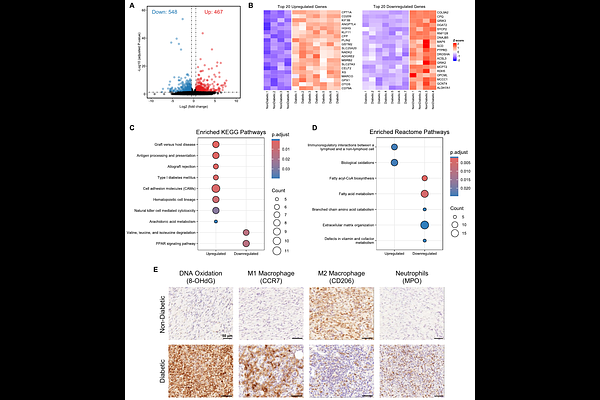
AbstractDiabetic foot ulcers (DFUs) remain a major clinical challenge as diabetes prevalence rises, emphasizing the need for improved therapeutics and relevant preclinical models. Common rodent wound healing models poorly recapitulate human skin anatomy and repair. Although porcine skin is comparable to human skin, many studies employ young, healthy pigs that do not reflect typical chronic human wounds. Here, we evaluated wound healing in full-thickness skin wounds in non-diabetic and diabetic Yucatan minipigs. RNA sequencing identified key transcriptional differences in wounds of diabetic versus non-diabetic animals, including pathways linked to increased inflammation and oxidative stress, as well as decreased metabolism and extracellular matrix organization, known hallmarks of DFUs. These findings support this preclinical model as a powerful approach for discovery and therapeutic testing in diabetic wounds and provide a novel data set for further mining of potential gene targets for diabetic wound intervention.