Modified meiosis in the tardigrade Hypsibius exemplaris maintains heterozygosity across the genome

Modified meiosis in the tardigrade Hypsibius exemplaris maintains heterozygosity across the genome
Coke, A. N.; Papell, L. D.; Burch, C. L.; Goldstein, B.
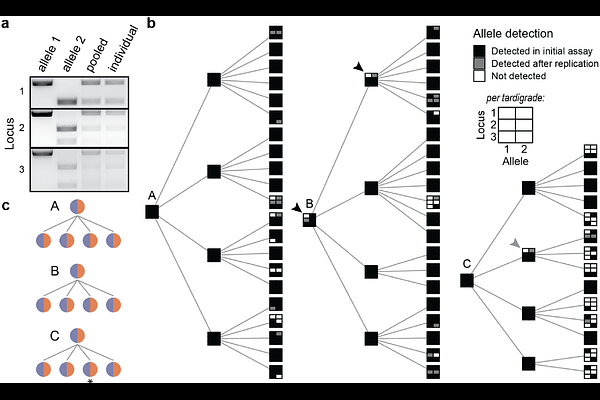
AbstractIn asexual reproduction, meiosis must be bypassed or altered to maintain ploidy from mother to daughter without fertilization. Most of the ways meiosis can be modified to this end are expected to reduce heterozygosity within individuals; however, many asexual species are highly heterozygous. Asexual reproduction is especially common among species of microscopic, desiccation-tolerant animals such as rotifers, nematodes, and tardigrades, but the cellular and genetic mechanisms underlying asexual reproduction have not been definitively documented in any species of tardigrade. Here, we show that the asexual tardigrade Hypsibius exemplaris fails to complete the cell division of meiosis I, followed by a complete meiosis II-like division, and reproduction proceeds without detectable loss of heterozygosity. We used a combined cytological and genomic approach to characterize the mechanism of reproduction and pattern of allele inheritance in this species. Furthermore, we identified heterozygous variants in a subset of transcriptionally active genes consistent with loss of function in one allele, suggesting that maintained heterozygosity in this species allowed divergence between alleles over time. This work establishes the meiotic mechanism and inheritance pattern of reproduction in H. exemplaris, which provides a framework for interpreting genetic variation in this organism as a laboratory model. Additionally, our finding that meiosis is modified in H. exemplaris via a mechanism that maintains heterozygosity across the genome adds to a growing body of evidence that maintaining heterozygosity is not detrimental to the long-term survival of asexual eukaryotes.