The ENL-USP7 Complex Regulates HIV Latency Through BRD4 Stabilization

The ENL-USP7 Complex Regulates HIV Latency Through BRD4 Stabilization
Ahmed, W.; Li, X.; Shabangu, C. S.; Chen, H.; Kutwal, N.; Kirchherr, J.; Liu, W.; Li, X.; Song, Y.; Luo, K.; Kaniskan, H. U.; Jin, J.; Gianella, S.; Margolis, D. M.; Archin, N.; Tang, Y.; Jiang, G.
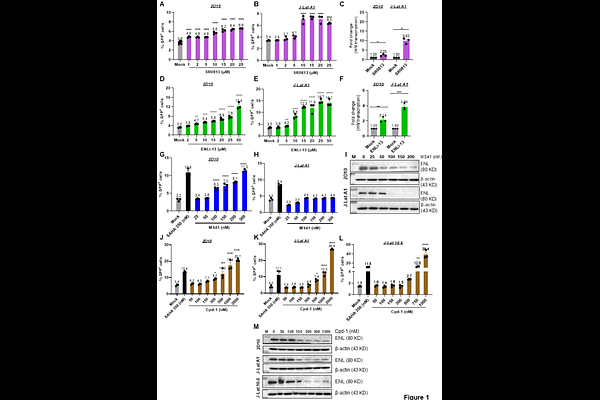
AbstractHIV-1 persists in CD4+ T cells and brain microglia through host factors that enforce viral latency, yet the mechanisms that stabilize key transcriptional regulators remain incompletely understood. Here, we identify the YEATS domain-containing protein ENL and its associated deubiquitinase USP7 as a host complex that maintains HIV-1 latency. USP7 stabilizes BRD4 by deubiquitination, suppressing HIV transcription and sustaining viral quiescence. Disruption of the ENL-USP7 complex using selective PROTACs reactivates latent HIV in cell line models, as well as in resting CD4+T cells and microglia isolated from people with HIV on antiretroviral therapy. These findings uncover a critical ENL-USP7-BRD4 axis that enforces HIV-1 latency and highlight USP7 as a potential target for latency-reversing strategies.