Adenine nucleotide translocase 2 (ANT2) deficiency reprograms ferroptosis in alveolar progenitor cells to promote emphysema

Adenine nucleotide translocase 2 (ANT2) deficiency reprograms ferroptosis in alveolar progenitor cells to promote emphysema
Mbaekwe, U.; Shi, J.; Ting, N.-C.; Hu, Q.; Gingras, S.; Koenigshoff, M.; Kliment, C. R.
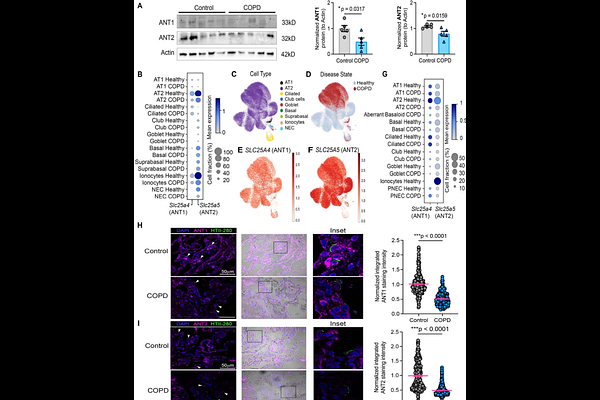
AbstractStem cell dysfunction and loss of renewal capacity are primary characteristics of tissue aging and decremental regeneration in response to injury. Alveolar type 2 cells (AT2) are key progenitor cells responsible for lung repair and are thought to be dysfunctional in diseases such as chronic obstructive pulmonary disease (COPD). AT2 cells are highly metabolic and rely on mitochondria, but how mitochondrial mechanisms influence their maintenance and cell fate is unclear. This gap is critical as no current therapies target lung repair or mitochondrial function in COPD. Here, we report that adenine nucleotide translocase 2 (ANT2), a key ATP/ADP transporter, is reduced in AT2 cells from COPD lungs, and that ANT2 loss impairs bioenergetics (ATP). We also identify, for the first time, ferroptotic susceptibility as a consequence of ANT2 loss in AT2 cells, leading to impaired self-renewal and progenitor capacity in alveolar organoids. Together, loss of ANT2 and the associated cellular dysfunction resulted in worsened lung damage or emphysema due to cigarette smoke in mice. Therapeutic restoration of ANT2 expression resulted in renewed AT2 stem cell function and prevention of emphysema by reducing oxidative stress and ferroptosis. These findings highlight the importance of ANT2 in metabolic regulation, plasticity, and cell resiliency of AT2 cells in the lung and that ANT2 is a potential target for lung repair.