Cryptosporidium sequentially remodels its single rhoptry into the host interface

Cryptosporidium sequentially remodels its single rhoptry into the host interface
Cohen, A.; Bergner, T.; Guerin, A.; Lebrun, M.; Laue, M.; Klotz, C.; Striepen, B.
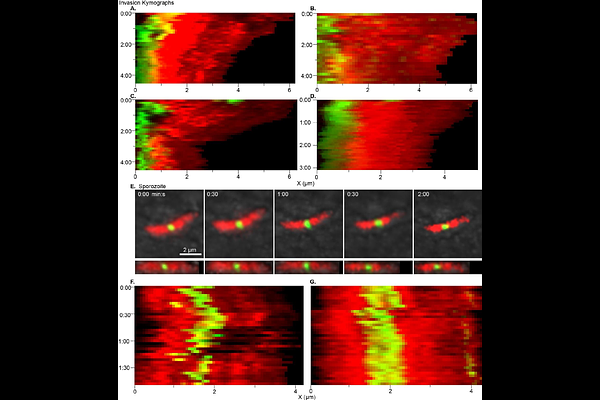
AbstractThe apicomplexan parasite Cryptosporidium is a leading cause of diarrheal disease in young children. Within the intestinal epithelium, Cryptosporidium establishes a unique intracellular niche in the apical brush border of enterocytes. A structurally complex interface between host and parasite acts as a holdfast and enables protein and metabolite transport. How the parasite invades its host cell and builds the interface is poorly understood. Here, we reveal parasite invasion with high temporal and spatial resolution using rigorous molecular markers. We find that sequential discharge of specialized secretory organelles anchors the parasite within the host prior to internalization. The single Cryptosporidium rhoptry persists beyond its initial pre-invasion discharge, acting as a conduit for the secretion of multiple waves of effector proteins. Ultimately, the rhoptry membrane gives rise to the feeder organelle that separates host from parasite cytoplasm. These findings lead us to propose a mechanistic model of Cryptosporidium invasion and intracellular parasitism.