Faecalibacterium and Others may be able to Predict the Response of Infliximab in Patients with Ulcerative Colitis

Faecalibacterium and Others may be able to Predict the Response of Infliximab in Patients with Ulcerative Colitis
Zhu, Y. F.; Luo, T. Y.; Wu, J.; Chen, Y. J.; Liu, C. Y.
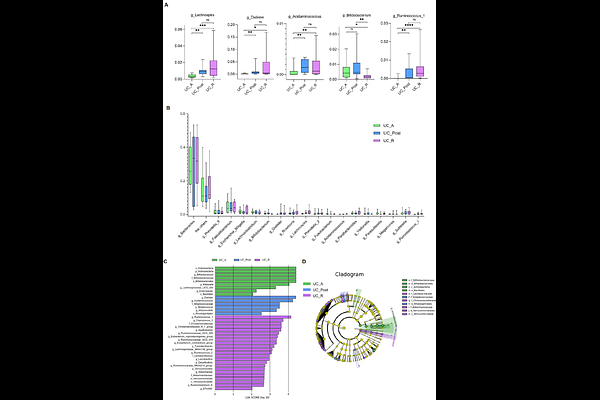
AbstractObjective: To explore the impact of IFX on intestinal ecological imbalance in UC and the role of gut microbiota in predicting the response of IFX. Result: The clinical study included 14 patients with moderate to severe active UC who received IFX intervention. Fecal samples of UC patients who reached early clinical remission status during the active phase, after the first IFX intervention, and at 14 weeks were collected for 16S rDNA gene testing and microbial community analysis. Animal research will establish a UC rat model using TNBS, inject it intraperitoneally with IFX, and collect fecal samples from rats for 16S rDNA gene detection and microbial community analysis. IFX can improve the ecological imbalance environment in the intestine, including Trichospira, Roseburia, Faecalis, Coprococcus, Veillonella, Dialister, Streptococcus in the Firmicutes phylum, Fusobacterium, a member of the Fusobacterium phylum, and Akkermansia, a member of the Akkermansia phylum, may be biomarkers for predicting the response of biological agents. Conclusion: The presence of certain bacterial communities, such as Faecalibacterium, can be regarded as markers of ecological imbalance and can predict the response of biological agents.