Vacidobactin A: An anti-Pseudomonas aeruginosa siderophore

Vacidobactin A: An anti-Pseudomonas aeruginosa siderophore
Wright, G. D.; Kaur, M.; Burrows, L. L.; Chan, D. C. K.; Wang, W.; Koteva, K.; Guitor, A. K.; Wardere, H.
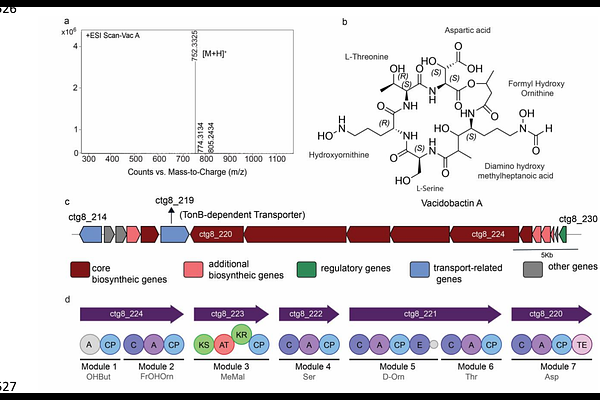
AbstractMultidrug-resistant (MDR) Pseudomonas aeruginosa poses a significant clinical challenge due to its poorly permeable outer membrane, efflux systems, biofilm formation, and rapid acquisition of resistance genes. The lack of new treatments for P. aeruginosa infections underscores the necessity for innovative therapeutic solutions. Iron uptake is essential for bacterial survival, making it a promising target for the development of new antimicrobials. Iron-chelating siderophores are vital for bacterial iron acquisition, important agents for direct antimicrobial action, adjuvants to enhance the effectiveness of currently available antibiotics, and components of prodrugs that facilitate the transport of covalently linked antibiotics into the cell. Here, we report the anti-pseudomonal activity of vacidobactin A, a siderophore produced by the soil bacterium Variovorax paradoxus, identified through a screen of natural product extracts targeting a clinical MDR strain of P. aeruginosa. Vacidobactin A inhibits P. aeruginosa growth by limiting iron availability, particularly in strains that do not produce pyoverdine, their native siderophore. Expression of a TonB-dependent transporter sourced from the vacidobactin producer in a P. aeruginosa pyoverdine and pyochelin-null mutant restored its ability to acquire iron and grow in the presence of vacidobactin. Additionally, vacidobactin A synergized with thiostrepton, which hijacks pyoverdine receptors to enter the cell and inhibit protein synthesis. This study supports the therapeutic potential of targeting P. aeruginosa iron acquisition pathways and leveraging siderophores as adjuvants to enhance the efficacy of existing antimicrobials. These findings, along with recent advancements in siderophore-based research and combination therapies, offer innovative strategies to combat antibiotic-resistant infections.