Maternal preconception calorie restriction reprograms coping strategies, socio-sexual behaviour, and endocrine function in adult rat offspring

Maternal preconception calorie restriction reprograms coping strategies, socio-sexual behaviour, and endocrine function in adult rat offspring
Zelko, M. D.; Hazi, A.; Nasser, H.; Levay, E. A.; Corrone, M.; Penman, J.; Johns, T. G.; Govic, A.
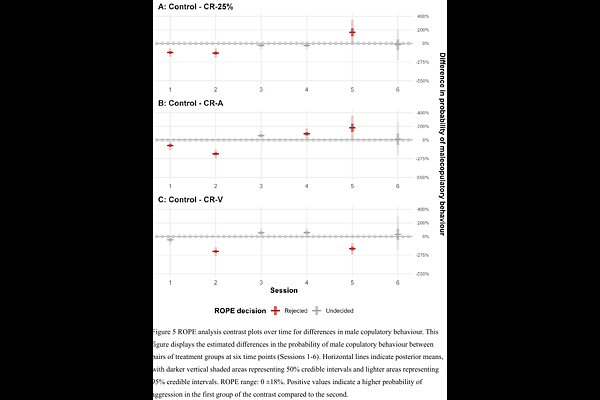
AbstractMaternal nutrition before conception is recognised as a determinant of offspring development; however, the behavioural and neuroendocrine consequences of preconception calorie restriction (CR) remain poorly understood. This study isolated the preconception window to examine how different CR patterns, stable (25% reduction; CR-25%), unpredictable deprivation (CR-A), and variable (25-75% fluctuation; CR-V), affect adult offspring outcomes. Male and female progeny from preconception CR female Wistar rats were assessed across domains sensitive to early-life programming, including anxiety- and depression-like behaviour, coping style, socio-sexual behaviour, and hypothalamic-pituitary-gonadal (HPG) axis activity. Preconception CR produced sex- and diet-specific effects. Females exhibited transient reductions in exploratory behaviour and more active coping styles, particularly CR-25% and CR-V animals. In males, all CR regimens enhanced copulatory behaviour and reduced aggression toward females. Endocrine profiling revealed divergent HPG responses: CR-A males showed elevated basal faecal testosterone metabolites (fTM) but reduced basal serum testosterone, whereas CR-V males exhibited blunted androgenic reactivity post-social provocation. These findings demonstrate that maternal preconception CR can program male offspring toward a prosocial, sexually motivated phenotype and female offspring toward an enhanced coping style, underscoring this period as a sensitive window for shaping behavioural and endocrine trajectories.