Deep learning framework for kinematic event detection and stimulation decoding in primate reaching behavior

Deep learning framework for kinematic event detection and stimulation decoding in primate reaching behavior
Markus, A.; Sinha, N.; Prut, Y.; Goldberger, J.
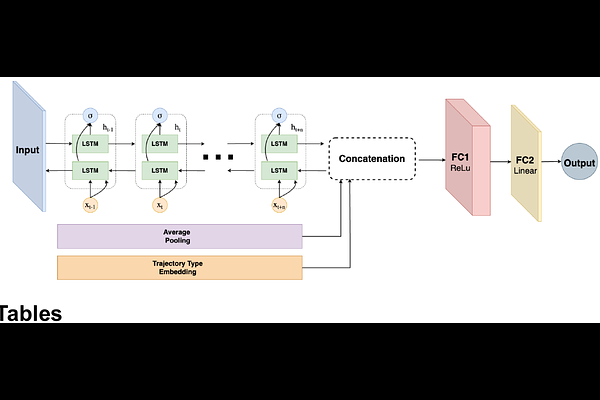
AbstractAccurate analysis of motor behavior requires the reliable detection of ongoing kinematic events and a granular characterization of the changes in motor output that occur in response to neural impairments. This article describes a deep learning framework based on bidirectional long short-term memory (BiLSTM) networks developed to analyze single-trial three-dimensional reaching trajectories recorded from two non-human primates. The framework was used to detect movement onset and corrective turning points, and to differentiate control from the perturbed trials during which cerebellar output was blocked. This approach was compared to manually annotated data. Only small within-animal errors in detecting movement onset times were observed (8.92 +/- 2.03 ms and 9.56 +/- 3.64 ms for the two monkeys). These errors were significantly smaller (p < 0.001) than those obtained using conventional velocity-threshold methods. Transferring the same detection algorithm from one animal to the other resulted in large errors because the reconstructed workspaces were represented in different coordinate frames. Orthogonal Procrustes alignment substantially reduced the between-animal event-detection errors, and brought performance closer to the within-animal range. Decoding of the perturbed vs. the control trials achieved above-chance levels of accuracy for each animal (accuracies of 71.0% and 61.9% respectively). However, the between-animal generalization was poor (near chance level) and was not improved by geometric alignment. These findings suggest that geometric alignment can support the transfer of shared kinematic event structure between animals, but that perturbation-related changes in movements reflect animal-specific compensatory strategies which cannot be generalized.